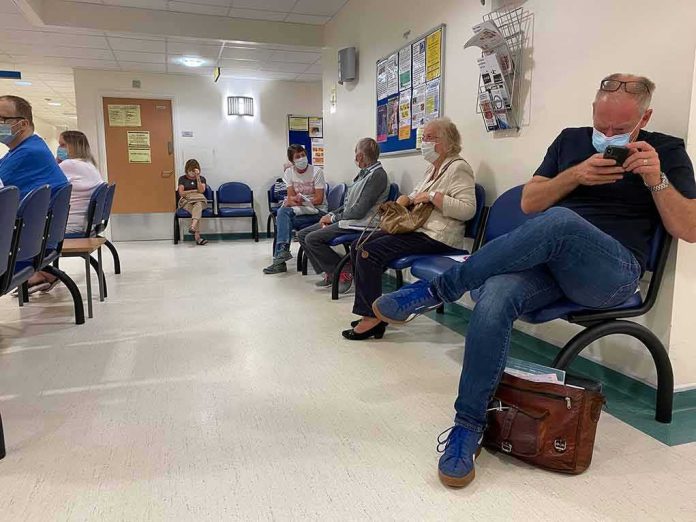
Half of Canadians say they have skipped seeing a doctor or going to a hospital because they expected to wait too long, according to a new Léger survey.
Story Snapshot
- 50% of surveyed adults said they avoided care due to expected delays.
- Women, younger adults, and Quebec residents reported higher avoidance rates.
- 27% said they paid for private services to bypass waits or poor service.
- Online poll of 1,510 adults was commissioned by three policy groups.
A blunt signal from patients across Canada
Léger asked a plain question: Do you ever avoid going to a hospital or doctor because you do not believe you will get timely treatment? Half said yes; 47% said no; the rest were unsure. The poll, conducted online October 16–18, 2026, surveyed 1,510 adults. The Canadian Press reported the findings, and several outlets republished the story, which spread the core result nationwide. The question measured behavior tied to expectations, which matters for how people use the system.
Coverage highlighted subgroup gaps that track with broader access strains. Women reported higher avoidance than men. Adults under 55 reported higher rates than older Canadians. Quebec residents were above the national average. Those patterns align with other signals of uneven access and crowding, including local emergency department pressures and trouble getting family doctor appointments. The topline does not prove medical harm in each case, but it shows a large share of people opt out before they even try.
What Canadians did instead of waiting
More than one in four respondents said they paid for private health services to avoid long lines or unsatisfactory experiences in the public system. That choice points to a safety valve for those who can afford it and a dead end for those who cannot. From a common-sense, conservative view, two things can be true: the public system is a promise worth keeping, and people need timely options when the promise breaks. The survey did not detail which services they bought, but it captured the trend line.
Newsrooms that carried the poll also noted context that keeps the number in bounds. The instrument asked about “ever” avoiding care and did not pin the behavior to the last year. The result also did not show whether people who skipped a doctor then spoke to a nurse, pharmacist, telehealth line, or got better on their own. Even with those limits, the takeaway is clear: many Canadians think a trip to the doctor will cost hours they cannot spare, so they do not go.
How this fits the wider access crunch
System data explain why people expect to wait. The Canadian Institute for Health Information reports that in 2024 only 27% of adults with a regular provider could see that provider the same or next day for non-urgent issues. Emergency department waits link to pressures across the system, from hard-to-find primary care to slow discharges to home care or long-term care. When all pipes run tight, emergency rooms back up, and people learn to avoid the whole maze. The learned behavior the poll captured reflects those daily trade-offs.
Independent measures of specialist access reinforce the theme. A 2024 report from the Fraser Institute found a median wait of about 30 weeks from referral to treatment across specialties, up from the year before. While survey wording and sponsorship can shape how headlines read, the broader evidence points in the same direction: people face delays across the continuum. That makes the 50% avoidance figure plausible as a lived response, not a shock headline chasing clicks.
Policy stakes that cut past slogans
Commissioning groups behind the poll favor reforms that include more private delivery. Their interest does not erase the result; it does set the frame in which it will be used. The core policy test is simple and non-ideological: Can a patient get timely, safe care at a fair price? A practical path lines up with conservative instincts about accountability and choice. Publish wait dashboards that show real times by clinic and hospital. Pay providers for results, not just activity. Let patients book across regions when capacity exists.
Build lawful, transparent lanes for private or community clinics to handle routine imaging, physio, and day surgeries, while protecting access for lower-income patients through clear rules and targeted vouchers. Expand pharmacist prescribing and nurse-practitioner clinics to offload primary care backlogs. These steps respect taxpayer dollars and the value of time. The poll’s message is not subtle: when people think the line is endless, they walk away. Policy should shorten the line, show the line, or offer another door.
Sources:
lifesitenews.com, thecanadianpressnews.ca, winnipegfreepress.com, wellandtribune.ca, canadianhealthcarenetwork.ca, theepochtimes.com, theccf.ca, ijhpm.com, cihi.ca