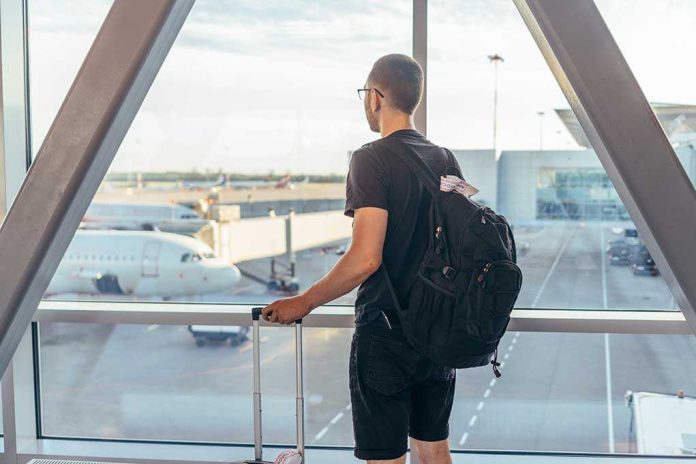
Across America, the federal government shutdown has turned airports into ghost towns, with essential staff working without pay, flight delays multiplying, and passengers abandoning travel plans in droves—an unprecedented breakdown in the world’s busiest aviation system.
Story Highlights
- The October 2025 government shutdown has triggered mass flight delays and cancellations at major US airports, with air traffic controllers and TSA officers working unpaid amid rising sick leave and morale issues.
- Passengers are avoiding airports due to uncertainty and long wait times, creating a ripple effect across the travel industry and local economies.
- The crisis is exacerbated by pre-existing shortages of air traffic controllers and heightened political gridlock, with no end in sight as Congress and the White House remain deadlocked.
- This shutdown’s impact on aviation is more severe than past episodes, threatening not just convenience but the safety and reliability of the entire system.
How the Shutdown Paralyzed Air Travel
The federal government shutdown that began October 1, 2025, immediately disrupted operations at major hubs like Denver, Newark, Philadelphia, Boston, Dallas, Chicago, Houston, and Nashville. Air traffic controllers and TSA officers—deemed essential—are required to work without pay, but as the shutdown drags on, more are calling in sick, unable to shoulder the financial and emotional strain. The result: staffing shortages, longer security lines, and cascading delays that ripple through the system.
Passengers, faced with uncertainty and hours-long waits, are canceling trips or avoiding airports altogether. Airlines, caught in the crossfire, warn of worsening delays and temporary terminal closures. The FAA and TSA, already understaffed before the shutdown, now face operational crises that could compromise safety and efficiency.
Historical Precedent or New Crisis?
Government shutdowns are not new, but the 2025 episode stands out for its severity. The 2018–2019 shutdown caused disruptions, but this time, the aviation system entered the crisis with a shortage of 3,000 air traffic controllers—a deficit that magnifies the current chaos. Past shutdowns led to temporary terminal closures and mounting delays; this one risks eroding public trust in air travel for years to come.
The political impasse centers on a $1.7 trillion budget fight between President Trump and congressional Democrats, with healthcare and other priorities at stake. While essential staff remain on the job, their unpaid status creates a ticking time bomb for the system. The longer the shutdown lasts, the greater the risk of a complete breakdown in air traffic control and security operations.
Who Bears the Brunt?
Passengers face the most visible impact—delayed flights, missed connections, and abandoned plans. But the pain extends far beyond the terminal. Airline revenues are plummeting as bookings drop, airport concessions and local businesses suffer, and rural communities risk losing subsidized flights that connect them to the national network.
SHUTDOWN IMPACTS | An airport in Southern California had no air traffic controllers for nearly six hours on Monday, causing major delays and cancellations. https://t.co/Ujkeo3SOSf pic.twitter.com/E53WPViURy
— FOX61 (@FOX61News) October 7, 2025
For air traffic controllers and TSA officers, the strain is personal and professional. Unpaid work, mounting bills, and the stress of maintaining safety under duress are pushing morale to the brink. These workers have little leverage but their absence—through sick leave or burnout—directly threatens the system’s integrity.
Economic and Political Fallout
The shutdown’s economic impact is immediate and broad. Airlines, airports, and local economies lose revenue with every canceled flight. The travel and hospitality sectors, still recovering from pandemic-era disruptions, face another blow. Analysts warn that prolonged instability could trigger job losses and market jitters, with ripple effects across the economy.
Politically, the shutdown entrenches partisan divisions. Democrats and Republicans trade blame, while industry groups urge a swift resolution. The public, caught in the middle, grows increasingly frustrated with a system that seems unable to function without constant crisis.
Expert Perspectives and What Comes Next
Industry leaders like Geoff Freeman of the US Travel Association warn that delays and cancellations will only worsen if the shutdown continues. Transportation Secretary Sean Duffy has stated bluntly that further disruptions could force the FAA to close airspace—a drastic step with global consequences. Aviation experts highlight the compounding risks of staffing shortages and unpaid work on safety and efficiency.
There is no clear path to resolution. Congress remains deadlocked, and the White House shows no sign of compromise. The longer the shutdown lasts, the deeper the damage to the aviation system—and the harder it will be to rebuild public trust. For now, passengers, workers, and the entire travel industry are left waiting, with no takeoff in sight.
Sources:
Business Standard: Prolonged US govt shutdown could impact travel plans amid flight delays
ABC News: Prolonged US government shutdown impact travel plans
Moneycontrol: Why a US government shutdown is causing fresh flight delays
Economic Times: Flight delays government shutdown
Finhabits: Government shutdown air travel impact families