A single, barbed sentence from Alexandria Ocasio-Cortez turned a niche coalition debate into a referendum on trust, labels, and the price of strange-bedfellow politics.
Story Snapshot
- AOC, on camera, rejected aligning with Marjorie Taylor Greene, calling her a “proven bigot and antisemite.” [2]
- The remarks targeted alliance-building around Gaza-Israel issues and drew both support and left-flank criticism. [1][2]
- Greene reframed the clash as about votes on Israel funding, not insults, citing an amendment she says AOC opposed. [1]
- The fight spotlights a larger question: when, if ever, do ideological opposites partner on a single issue? [2][3]
A Public Refusal, On The Record
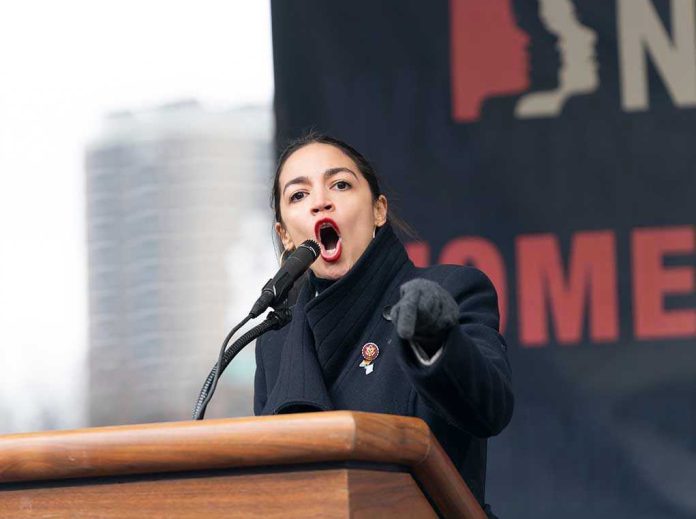
Alexandria Ocasio-Cortez used a University of Chicago Institute of Politics appearance to disavow cooperation with Marjorie Taylor Greene on Gaza-Israel policy, saying she does not trust Greene and labeling her a “proven bigot and antisemite.” The event’s video captures the direct phrasing and context, eliminating ambiguity about what was said and why it was said. AOC tied her stance to movement strategy, warning that aligning the left with figures she called white nationalists “does not serve us.” [2]
Coverage of the remarks emphasized that the pushback was not personal pique but a political boundary: do not launder reputations through temporary policy overlap. Reporting described AOC as rejecting calls from parts of the left and some Democrats to praise or partner with Republicans who carry controversial records. That framing posits a clear standard—no tactical alliances if the partner’s record crosses certain moral lines—while signaling to activists that optics and credibility matter as much as a single vote. [1]
Greene’s Counter: Votes, Not Vibes
Marjorie Taylor Greene answered by dragging the dispute onto procedural turf. She argued that AOC’s talk masks a refusal to vote for Greene’s amendment to strip funding for Israel, insisting “votes are the only thing that matters.” That claim attempts to flip the narrative from character to conduct: if the aim is changing policy, then block-by-block legislative cooperation should trump purity tests and name-calling. The sources provided do not include the amendment text or roll call, leaving the legislative specifics unresolved. [1]
The tactical case for cross-issue cooperation does have visible promoters. Commentators criticized AOC for spurning a chance to move the ball on a shared objective, suggesting that inflexible posture wastes leverage. The on-record debate, including video of AOC’s remarks, confirms that the real fault line is strategy: whether to accept help from an adversary on a narrow issue when broader values and histories fundamentally diverge. That question eclipsed any detailed vetting of Greene’s record within this evidence set. [2][4]
The Cost Of Strange-Bedfellow Politics
Historically, coalitions of convenience have delivered results when participants strike narrow, transactional bargains and keep moral distance. Yet those coalitions also risk reputational spillover, especially when one partner carries allegations that many voters consider disqualifying. AOC’s argument places reputational risk above tactical gain. From a common-sense conservative lens that prizes prudence and accountability, the essential inquiry becomes: does a one-off vote justify elevating a figure your base deems unfit, and will that trade lock in durable policy or only produce a momentary headline? [2]
Greene’s retort spotlights a countervailing conservative instinct: measure seriousness by votes and outcomes, not virtuous branding. If the objective is to restrain foreign spending or recalibrate policy on the Middle East, then gathering 218 votes matters more than rhetorical purism. Still, a results-first ethic also demands documentation. Without the amendment’s text, sponsors, and floor debate, the claim that AOC spurned a meaningful path to policy change remains assertion, not proof. Serious coalition-building begins with legislative receipts. [1]
What The Evidence Proves—and What It Doesn’t
The record conclusively shows AOC said the words, on camera, in a formal venue, with a clear rationale against partnering with Greene on Gaza-Israel issues. That is established. The record does not, within the provided materials, substantiate the “proven bigot and antisemite” predicate with specific incidents or primary documents. Nor does it produce the text or vote history of Greene’s cited amendment. Those gaps matter because they determine whether this story is about justified red lines or missed opportunities wrapped in rhetoric. [2][1][3]
Aoc called out Marjorie Taylor Green on her revenge tour against President Trump.
Democrats are endorsing Thomas Massie.
Money is being thrown around for campaigns. Foreign money.
Pinecones is something I will never look at the same.
If you question any of it, then you…
— Sassafrass84 (@Sassafrass_84) May 19, 2026
Two practical tests can close the loop for readers who value clarity over clamor. First, pull the full University of Chicago transcript and note any elaboration tying Greene to documented statements or actions that meet accepted definitions of antisemitism; then judge whether “proven” holds. Second, retrieve the amendment’s language and the roll call; then decide whether AOC walked away from a real policy win or just declined a symbolic maneuver. Until then, both sides are arguing from principle with partial paperwork. [2][1]
Sources:
[1] Web – AOC blasts ‘proven bigot and antisemite’ MTG, earning some far-left …
[2] YouTube – AOC blasts ‘leftist hero’ MTG, calls her ‘proven bigot’
[3] Web – Ocasio-Cortez Rejects Bipartisan Alliance With Marjorie Taylor Greene
[4] Web – Marjorie Taylor Greene EXPOSES AOC’s REFUSAL To Work …