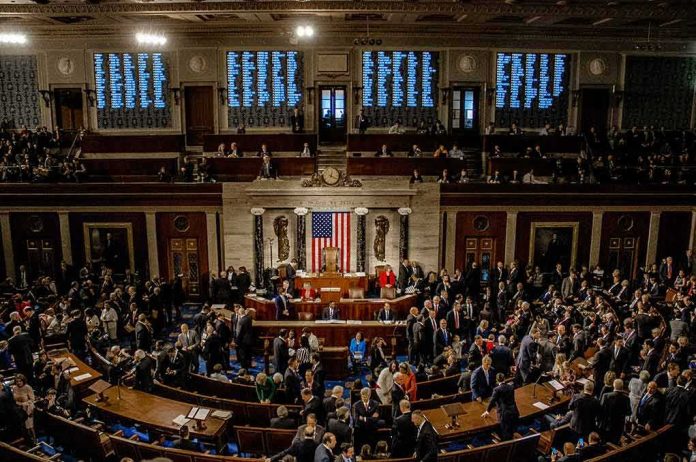
House passage of the Lindsey O. Graham Sanctioning Russia and Iran Act hands President Trump sweeping tariff and sanctions tools aimed at Russia’s war economy.
Story Snapshot
- The House approved the Graham sanctions bill and sent it to President Trump.
- The bill authorizes broad sanctions and new tariff powers targeting Russia’s energy revenue.
- The measure carried bipartisan support despite fights over presidential tariff authority.
- The House and Senate texts align, honoring the late Senator Lindsey Graham.
What Congress Passed And Why It Matters
House lawmakers approved the Lindsey O. Graham Sanctioning Russia and Iran Act of 2026, moving a major sanctions package to President Trump’s desk. Congress.gov records the bill as H.R. 5334 and shows House passage, with the text describing a range of sanctions, tariffs, and prohibitions tied to Russia’s economy and energy trade. Reuters reported the package empowers the president to set tariffs up to 100 percent on major buyers of Russian energy, a sharp escalation meant to curb Moscow’s revenue.
Lawmakers framed the bill as a direct strike at Russia’s ability to finance its war by selling oil and gas. The Senate companion, S. 5025, outlines aggressive pressure tools against Russian officials, entities, and sectors that support the war effort. A House release said the measure honors the late Senator Lindsey Graham and that the House text matches the Senate’s language, signaling a clean path to the president without further negotiation over core provisions.
How The Vote Broke And What Unified Support Signaled
The measure drew votes from both parties, according to a televised report that cited a 262 to 159 final tally, with most Republicans and dozens of Democrats in support. Bipartisan backing suggests a shared goal to limit Russia’s war funding even as members argued over how much tariff power to hand the White House. Congress.gov’s bill tracker confirms House approval of H.R. 5334, though the public roll call details are not fully visible in the supplied record.
Supporters argued Congress must use every legal tool to choke off Russian revenue streams. Critics warned that high tariffs and secondary sanctions can strain trade ties and hand too much discretion to the executive branch. Congressional Research Service materials describe how the bill’s tariff authorities stack on top of other duties and could extend to certain countries that continue buying Russian crude oil or natural gas, not only to Russia itself.
What The Bill Would Do On Sanctions And Tariffs
Congress.gov’s summary highlights a broad menu: financial sanctions on Russian individuals and entities, sectoral penalties, trade limits, and new tariff tools aimed at energy-linked flows that fuel the Kremlin’s budget. Reuters coverage emphasized the president’s ability to levy tariffs up to 100 percent on big buyers of Russian energy, a move designed to make such purchases costly and risky. The Senate text lays out enforcement paths that reach banks, shippers, and other nodes used to skirt existing sanctions.
Policy experts often call these “secondary” pressure tools because they hit non‑United States actors who help enable targeted trade. Prior federal analyses explain that such measures expand leverage beyond direct bans and can deter intermediaries across global supply chains. That approach reflects a years‑long trend in sanctions policy, where Congress pushes broader tools when existing penalties prove too easy to evade through third countries or shadow fleets.
Why This Fits A Larger Washington Pattern
For years, Congress has toggled between tighter sanctions and debate over presidential power to manage them. The legal backbone sits in national emergency laws that allow fast action but also raise oversight questions for both parties. The Graham bill tracks that history: it sharpens penalties to hit Russia’s revenue while widening presidential tariff authority, which free‑trade advocates and civil libertarians often resist on process grounds even when they support tougher pressure on Moscow.
Russia launched another massive attack on Ukraine with ballistic missiles, other missiles and drones – on the same night that the US House passed the Lindsey Graham sanctions bill.
Civilian infrastructure was hit across eight regions. Energy infrastructure was targeted in Sumy… pic.twitter.com/7lqmuW37ep
— UKR Consulate NY (@UKRinNewYork) September 17, 2026
Both conservatives and liberals voice a common worry here: concentrated power in Washington can drift from its stated purpose. Supporters see a necessary tool against a hostile state. Opponents fear tariffs can morph into back‑door taxes and bargaining chips that hurt American workers and allies first. Today’s vote shows Congress wants to squeeze Russia harder. The next test will be execution: how the administration targets tariffs, shields American consumers, and coordinates with partners who still buy Russian energy.
Key Uncertainties And Next Steps
House and Senate backers say the texts align, which would speed enactment once President Trump signs the bill. Congress.gov confirms passage but does not show every procedural step in one place within the provided excerpts, leaving some sequencing details outside this snapshot. If signed, agencies would draft rules and advisories to banks, shippers, and importers. Markets will watch how quickly tariffs ramp, which countries face penalties, and whether carve‑outs exist for energy security or humanitarian needs.
Sources:
youtube.com, ms.now, congress.gov, reuters.com, apnews.com, oliverwyman.com