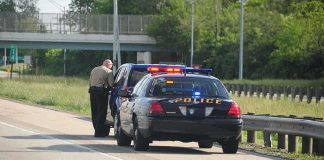
When law enforcement agencies directly profit from the property they seize without needing to charge anyone with a crime, corruption doesn’t just happen occasionally—it becomes inevitable.
Story Snapshot
- Oklahoma City police misappropriated over $400,000 in forfeiture funds across 20 years, exposed by former city attorney Orval Jones
- Between 2023 and 2025, police chiefs and officials in Florida, New York, Pennsylvania, and Detroit stole millions from forfeiture accounts
- Federal and state authorities seized $2.5 billion in cash from highway stops over a decade, with half the seizures under $8,800
- Civil forfeiture requires no criminal charge or conviction—property owners must prove their innocence to recover seized assets
- New Mexico and Maine eliminated civil forfeiture entirely, replacing it with criminal forfeiture that requires conviction first
The System That Treats Your Property as Guilty
Civil forfeiture operates under a legal fiction that would make the Founding Fathers recoil. The property itself stands accused, not the owner. Police can seize your cash, your car, even your home based solely on suspicion of criminal involvement. No arrest necessary. No charges filed. No conviction required. The burden then falls on you to prove your property is innocent—a complete inversion of American justice. This isn’t how the system was supposed to work when Congress designed it to dismantle drug kingpin empires in the 1980s.
From Drug Lords to Ordinary Citizens
The evolution from targeting multimillionaire traffickers to seizing a barbecue restaurant owner’s $17,550 during a traffic stop reveals how far civil forfeiture has strayed from its original purpose. The DEA alone grabbed $209 million from airport travelers between 2006 and 2016, including $82,373 from a woman transporting her father’s life savings. A supermarket owner lost $35,000. Candy distributors forfeited $446,000. These aren’t cartel bosses—they’re Americans whose cash made them targets.
The Washington Post’s investigation uncovered 61,998 cash seizures on highways over ten years. Analysis of 400 cases revealed those pulled over were predominantly Black, Hispanic, or other minorities. When carrying cash becomes evidence of guilt, and when that cash funds the very departments making seizures, the incentive structure creates predictable injustice. Only one in six victims challenge seizures because legal costs often exceed what was taken.
The Oklahoma City Blueprint for Highway Robbery
Former Oklahoma City attorney Orval Jones didn’t mince words when he documented how his city’s police department handled forfeiture money. He warned Oklahoma City risked becoming “the center of highway robbery in the heart of the country.” His meticulous records revealed systematic misappropriation exceeding $400,000. Police labeled seized property as having unknown owners despite possessing owner information in their own reports. In one 2017 case, officers kept $7,000 claiming missing address paperwork. When the owner sued and won, taxpayers reimbursed him while police retained the cash in their forfeiture fund.
When Millions Go Missing, the Pattern Emerges
The Oklahoma City scandal represents one data point in a disturbing pattern. June 2025 brought charges against Hialeah, Florida’s former police chief for grand theft and organized fraud after $3.6 million in forfeiture funds vanished. An Albany, New York sheriff’s office budget analyst received sentencing in 2024 for stealing $122,000. A Pennsylvania drug task force detective pleaded guilty to taking $171,000. A Detroit-area prosecutor admitted embezzling $600,000. These aren’t isolated incidents—they’re the logical outcome of loosely supervised extra-budgetary accounts filled with millions in seized cash.
Private contractors profit too. Joe David’s Desert Snow firm kept 25 percent of $427 million in seizures over five years. Alabama deputy Eddie Ingram personally enriched himself with $11 million over a similar period. An Arkansas deputy confirmed his department received “about half a million per year” in seized goods, illustrating departmental dependency on forfeiture revenue. A Florida police chief acknowledged the reality: street cops looking to take a few thousand dollars from drivers by the roadside.
The Rolls-Royce Sheriff and Other Absurdities
A southern sheriff seized a Rolls-Royce from a drug dealer and made it his personal vehicle. Little Compton, Rhode Island’s seven-officer police force netted $3.8 million in a drug bust and outfitted themselves with $1,700 video cameras and heat detection devices. A Nebraska case ended with a federal judge ordering $50,000 returned after a sheriff’s deputy was recorded suggesting they “take his money and, um, count it as a drug seizure.” When police departments shop for equipment using money they seized without proving criminal activity, the corruption writes itself.
Two States Show the Way Forward
New Mexico and Maine eliminated civil forfeiture entirely, replacing it with criminal forfeiture that requires conviction before the government keeps property. This reform addresses the core problem: the financial incentive that makes abuse endemic rather than exceptional. Law enforcement can still pursue assets tied to crime, but only after proving guilt in court. The burden of proof returns to where it belongs—on the government, not citizens defending their property. Most states continue operating under systems where accountability mechanisms remain virtually nonexistent.
An Oklahoma City forfeiture scandal highlights a bigger problem: When police can keep seized cash, abuse follows. https://t.co/nOtYtBKHTE
— reason (@reason) February 18, 2026
Reform advocates including the Institute for Justice and ACLU argue civil forfeiture violates fundamental due process rights. The legal fiction that property itself commits crimes creates perverse incentives regardless of individual officer integrity. When departments control the seizure process, determine what constitutes suspicious behavior, and directly benefit from proceeds, the power imbalance becomes insurmountable for ordinary citizens. The asymmetrical legal burdens and high attorney costs mean most victims never challenge seizures, perpetuating a system that undermines rule of law.
Sources:
How Police Officers Seize Cash From Innocent Americans – Priceonomics
When Police Can Keep Seized Cash, Abuse Follows – Reason
Civil Forfeiture in the United States – Wikipedia