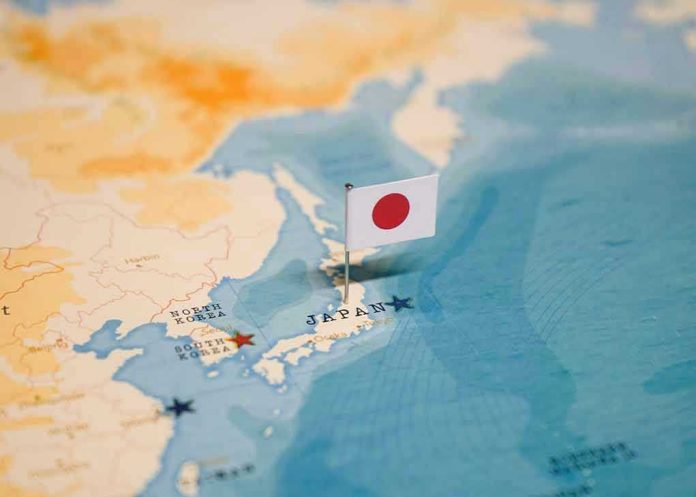
Tokyo’s remote Tokara Islands have been rocked by a relentless swarm of over 1,500 earthquakes, forcing residents to flee and once again exposing the vulnerability of isolated communities—while the world’s media obsesses over every tremor, the real question is: who’s left to protect the forgotten citizens when the ground literally won’t stop shaking?
At a Glance
- Over 1,500 earthquakes have shaken Japan’s Tokara Islands since June 21, 2025
- About half the population of Akusekijima, the hardest-hit island, has evacuated
- Authorities cite possible underwater volcanic activity as the cause, but the crisis has no clear end in sight
- Despite minimal physical damage, psychological and economic tolls are mounting
- Misinformation and media panic are amplifying public anxiety in Japan and abroad
Relentless Quakes Force a Community to Flee
The people of Akusekijima, a tiny speck of an island in Japan’s southern Tokara chain, have been living through a nightmare since June 21, when their world began to shake—repeatedly, inexorably, and, according to experts, with no guarantee of stopping any time soon. The so-called “seismic swarm” has delivered more than 1,500 earthquakes, including multiple quakes above magnitude 5.0, in a territory where the population barely scratches 89 souls. For residents, sleep is a luxury, nerves are frayed, and evacuation has moved from theory to grim reality.
Mayor Genichiro Kubo, the man tasked with safeguarding these islands, announced the urgent evacuation of Akusekijima on July 3 after two strong magnitude 5.5 quakes hit in rapid succession. By July 4, about half the residents had abandoned their homes for the relative safety and anonymity of Kagoshima, a city that sits a grueling 11-hour ferry ride away. No deaths or serious injuries have been reported, but the psychological stress—anxiety, insomnia, and sheer uncertainty—is taking its toll. The ongoing tremors mean the remaining residents live in a constant state of readiness, bags packed and eyes on the horizon.
Experts Mull Over Magma, Media Fans the Flames
Seismologists and volcanologists are working overtime to decipher what’s stirring beneath the waves of the Pacific “Ring of Fire.” The consensus? The most likely culprit is underwater volcanic activity or magma movement, but the reality is that no one can predict when—if ever—this seismic tantrum will end. Japan is no stranger to earthquakes, sitting astride four tectonic plates and accounting for nearly a fifth of all seismic activity on earth. But this cluster—1,500 quakes in under three weeks, in such a confined area—has even the experts scratching their heads.
In the vacuum of hard facts, rumors have moved faster than ferries. Social media and some national outlets have hyped wild predictions, including a now-debunked claim that a manga comic foretold a catastrophic event for July 5, 2025. While the experts are clear—there’s no scientific basis for such prophecies—the panic has spread, impacting not just locals but also foreign tourists who now eye the region with suspicion. This is what happens when sensation trumps science: anxiety multiplies, confidence in authorities wavers, and the people most in need of calm, rational guidance are left to wade through a sea of misinformation.
The Human Cost: Displacement, Uncertainty, and Shrinking Communities
The immediate effects are obvious. Nearly half of Akusekijima’s population has evacuated, leaving behind a ghost town where daily life has been upended. There’s no school, no business as usual—just the constant threat of another tremor and the knowledge that, at any moment, the order to leave (again) could come. This isn’t just a physical displacement; it’s a blow to local economies, a disruption of families, and a psychological burden that doesn’t simply disappear with the next boat out.
Long-term, the outlook is even grimmer. These islands were already grappling with population decline, as young people left for better prospects on the mainland. Now, after weeks of uncertainty and fear, the exodus could become permanent. Local businesses—fishing, modest tourism, small shops—may never recover if the community shrinks further. Authorities are already reviewing disaster preparedness and evacuation protocols, but there’s only so much policy can do when nature decides to throw a tantrum and the media amplifies every rumor into a national crisis.
Why This Matters: Preparedness, Panic, and the Forgotten Citizen
While the world’s gaze flits from one natural disaster to the next, the situation on the Tokara Islands is a stark reminder of how quickly a community can be pushed to the brink—and how little attention is paid to those left behind when the news cycle moves on. The evacuation has drawn praise for its speed and organization, given the islands’ isolation and limited resources, but the deeper crisis—population decline, economic stagnation, and the corrosive effects of panic and misinformation—remains largely unaddressed.
For all the talk of “resilience” and “community spirit,” the reality is that Japan’s remote islands, like so many neglected corners of the developed world, are left to weather crisis after crisis with the faint hope that someone, somewhere in government actually remembers they exist. The people of Akusekijima and the greater Tokara Islands have shown courage, but courage isn’t a substitute for clear communication, targeted support, or policies that put citizens—not sensational headlines or bureaucratic platitudes—first. If only the rest of the world, and especially its governing elites, would pay as much attention to protecting forgotten citizens as they do to stoking fear and confusion.