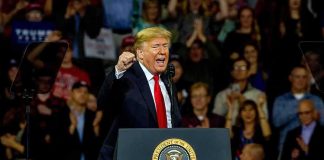
The order tells banks to probe immigration-linked risk, but the evidence offered so far is more assertion than audit—and that gap will decide who wins this fight.
Story Snapshot
- President Trump signed an executive order directing regulators to tighten customer identification and flag immigration-linked suspicious activity [1][2].
- Treasury is told to publish “red flags” tied to payroll tax evasion, hidden ownership, off‑the‑books pay, structuring, labor trafficking, and use of taxpayer ID numbers without verified legal presence [2].
- The Consumer Financial Protection Bureau is asked to weigh deportation or wage loss in loan ability‑to‑repay rules [2].
- Public sources confirm the directive’s scope but do not present quantitative proof of a widespread loophole or loss problem [1][2].
The executive order’s core: treat immigration status as a banking risk factor
The White House says the order protects the financial system from illicit activity, strengthens customer identification, and addresses credit risk from lending to immigrants without work authorization [2]. It directs the Department of the Treasury to issue an advisory identifying suspicious activity patterns linked to off‑the‑books wages, hidden account ownership, payroll tax evasion, structuring, labor trafficking, and use of individual taxpayer identification numbers without verified legal presence [2]. The American Bankers Association’s trade journal confirms the order and reports regulators will consider stronger customer due diligence and customer identification program changes [1].
The administration also instructs the Consumer Financial Protection Bureau to consider whether deportation or wage loss should factor into loan ability‑to‑repay standards [2]. That change would nudge lenders to price, decline, or structure loans differently for borrowers whose legal status could interrupt income. Supporters will call that common‑sense underwriting; critics will see status‑based gating that reaches far beyond confirmed fraud. Both views hinge on a missing piece: data that quantifies the incremental default risk tied specifically to immigration‑related income shocks in real portfolios [2].
What regulators may change inside bank compliance programs
The directive asks regulators to examine customer identification rules under the Bank Secrecy Act, including the risk treatment of foreign consular identification cards [2]. It also signals broader authority to collect additional customer information when warranted, which the American Bankers Association summarized as strengthening due diligence expectations [1]. That combination points to more rigorous document verification, enhanced screening for individual taxpayer identification number accounts, and faster referrals when wage payments or ownership structures appear inconsistent with legal work authorization, as Treasury’s forthcoming advisory would outline [2].
Practical effects will ripple through new‑account opening, loan underwriting, and suspicious activity monitoring. Banks would likely refresh risk taxonomies, tune monitoring scenarios to spot labor‑exploitation typologies, and document escalation logic for accounts opened with consular cards or individual taxpayer identification numbers without validated presence [2]. Those steps are standard compliance mechanics. The policy question is whether the net catches targeted criminal conduct or over‑collects data on lawful noncitizens and citizens who lack traditional documentation, a concern rooted in how system‑wide rules operate in practice [1].
The evidentiary hole: big claims, thin public proof
The fact sheet asserts structural credit risk and enumerates red flags but does not release bank examination findings, suspicious activity report trends, loss data, or the promised Treasury advisory to demonstrate scale [2]. The American Bankers Association article corroborates direction, not prevalence; it confirms regulators were told to act but offers no incidence metrics or loss ratios [1]. That gap makes the order look ministerial and forward‑leaning rather than reactive to a documented crisis. Conservative prudence welcomes tough controls, but conservative common sense also demands verifiable evidence before reshaping access for millions [1][2].
JUST IN 🚨: Trump signs an executive order pushing the Fed to revisit how fintech and #crypto firms access U.S. payment rails.
If rules ease, this could quietly unlock banking infrastructure for crypto companies and change how money moves behind the scenes. pic.twitter.com/pscoYOsnX6
— SheTrades (@SheTrades_08) May 20, 2026
Opponents argue the policy could chill lawful access by treating consular identification cards and individual taxpayer identification numbers as suspect, yet they likewise present little primary proof of denial rates or measurable harm under these exact changes [1]. The debate therefore reduces to dueling premises: an administration asserting risk categories without publicized datasets, and critics warning of overreach without quantified impact. The deciding factor will be what Treasury’s advisory, subsequent examiner guidance, and any published performance studies actually show once the paperwork meets the portfolios [1][2].
Sources:
[1] Web – New executive orders target banks and citizenship, nonbank access …
[2] Web – Fact Sheet: President Donald J. Trump Restores Integrity to …