Newly uncovered records suggest Prince Harry may have received special U.S. immigration privileges—fueling outrage over another case of elite exception while everyday Americans face strict border scrutiny.
Story Snapshot
- Prince Harry’s U.S. residency could be secured by a rare diplomatic or “golden ticket” visa, allowing indefinite stay despite drug use admissions.
- Legal challenges led by the Heritage Foundation demand transparency amid suspicions of preferential treatment for celebrities and royals.
- Over 1,000 government documents remain redacted, leaving the visa’s true nature—and any bypass of standard immigration rules—unconfirmed.
- The controversy highlights ongoing frustrations with unequal application of immigration law and perceived government overreach.
Prince Harry’s U.S. Residency: Preferential Treatment or Policy Loophole?
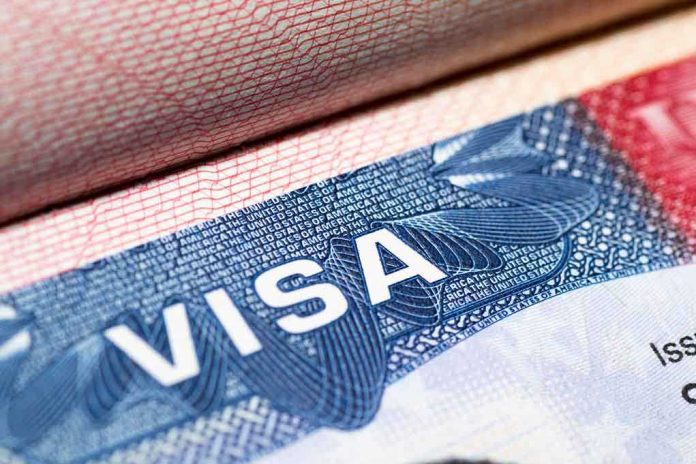
Recent developments reveal that Prince Harry’s ability to reside in the United States indefinitely may stem from a rare visa status—potentially a diplomatic A-1 or an O-1 visa for extraordinary ability. This comes despite his own admissions of illegal drug use, a factor that typically bars or at least complicates entry for ordinary applicants. The Heritage Foundation, a conservative advocacy group, has filed lawsuits against the Department of Homeland Security to force the release of Harry’s immigration records, citing public interest and equal application of the law. Their efforts have resulted in the disclosure of heavily redacted documents, but crucial details about the exact visa category remain hidden by privacy and security restrictions.
The controversy over Prince Harry’s status has ignited debate about whether elites and public figures receive special immigration breaks unavailable to regular Americans. U.S. immigration law requires disclosure of past drug use, with admissions often resulting in denial or revocation of visas. Harry’s high-profile memoir, “Spare,” explicitly documents his use of cocaine, cannabis, and psychedelics. Still, the Trump administration’s recently released and redacted records fail to confirm if Harry received a diplomatic exemption or simply benefited from celebrity privilege. Legal experts point out that A-1 visas are typically reserved for heads of state and certain royals, conferring broad residency with limited scrutiny—raising concerns about fairness and transparency in enforcement.
Legal and Political Fallout: Calls for Transparency and Accountability
The Heritage Foundation’s lawsuit represents mounting frustration among conservatives and legal watchdogs over perceived double standards in immigration law. Over 1,000 documents related to Harry’s case are held by the State Department and Bureau of Consular Affairs. A federal judge is now reviewing which, if any, of these documents should be made public, while the Department of Homeland Security continues to cite privacy and national security to justify withholding key details. Despite President Trump’s public statement that he will not seek to deport Harry, political debate intensifies over whether the government is applying the law consistently or bending rules for the well-connected.
Prince Harry has formally renounced British residency and voiced his intent to remain in the U.S. permanently—a move that would typically trigger rigorous immigration scrutiny. Sources close to the Duke insist he answered truthfully on his application, but without full disclosure, critics argue that transparency is lacking. The case has become a flashpoint for broader concerns about government overreach, selective enforcement, and erosion of trust in public institutions. It fuels the narrative that, while everyday Americans face increasingly strict border enforcement and bureaucratic hurdles, celebrities and elites are shielded by opaque processes and political connections.
Broader Implications: Immigration, Celebrity Privilege, and Conservative Values
For many Americans, this case is emblematic of a system that appears rigged against ordinary citizens. Immigration lawyers note that O-1 visas require evidence of extraordinary achievement but do not provide immunity from the consequences of drug use admissions. Meanwhile, diplomatic visas like the A-1 offer sweeping exceptions, often with little oversight. This disconnect between policy on paper and practice in high-profile cases undermines faith in the equal application of the law. It also raises alarms about expanding government discretion and secrecy—both of which run counter to core conservative values of limited government and equal justice. As legal battles over Harry’s visa status continue, the episode serves as a stark reminder of the need for vigilance in defending constitutional principles, fair process, and family integrity against elite favoritism and creeping bureaucratic power.
Prince Harry may hold rare ‘golden ticket’ visa letting him stay in the US for life as new records are unearthed https://t.co/X8NEwshSzr pic.twitter.com/nwHNRYyYyt
— New York Post (@nypost) September 4, 2025
Ongoing scrutiny ensures this issue will remain in the spotlight, with potential ripple effects for how high-profile immigration cases are handled in the future. Unless transparency prevails, trust in the system—and the government’s commitment to the rule of law—will remain at risk.
Sources:
Prince Harry’s US Visa Faces New Scrutiny After Over 1,000 Files Uncovered (KFOX TV)
Prince Harry’s US Visa Faces New Scrutiny After Over 1,000 Files Uncovered (KATU)
Prince Harry US Visa Type and Entry: Special Treatment? (Royal Insider)
Oh No: Prince Harry’s US Immigration Records Released (National Law Review)