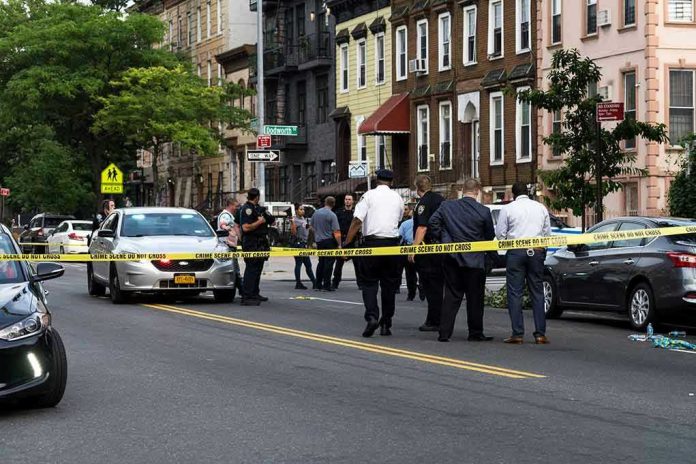
A Brooklyn building crumpled into an adjacent excavation, killing multiple people and forcing a massive, high-risk rescue that stretched through the night.
Story Highlights
- Building collapsed near Flatbush and Bedford Avenues shortly after 4 p.m., triggering a large rescue.
- About 250 firefighters and medics searched rubble using dogs, drones, and hand tools.
- Crews pulled survivors from the debris as officials warned more people could be trapped.
- Reports tied the collapse to an adjacent excavation; the exact cause remains under investigation.
What Happened at the Collapse Site
Witnesses and local outlets reported the collapse shortly after 4 p.m. near Flatbush and Bedford Avenues in Brooklyn. Firefighters and emergency medical crews swarmed the scene within minutes and began searching for people under the debris. Early counts shifted as crews worked. Reports described at least six to eight people dead and more than a dozen injured as the night went on, reflecting real-time updates from the field. Another outlet later put the toll at eight dead and seventeen injured.
Officials and reporters on scene described a dangerous site with unstable rubble. Firefighters crawled over broken walls and beams, dug by hand, and moved debris with buckets. Search teams used drones to map voids and dogs to find scent trails. Crews also brought in vacuum trucks to clear dust and lighter material. These methods match standard practice when heavy machinery could cause a secondary collapse or harm trapped survivors.
Scale and Tactics of the Rescue Operation
Television reports said roughly 250 responders from the Fire Department of the City of New York and the city’s emergency medical services took part in the search. New York Police Department dog units aided as well. Cameras captured rescuers pulling at least one survivor from the rubble around 6:15 p.m., and other reports said two people were removed soon after the building fell. Officials warned that more people could still be inside and urged patience as teams worked methodically.
Fire officials repeatedly stressed that the search was active and focused on saving lives, not just recovery. That choice shaped every step, from slow debris removal to repeated structural checks between pushes. Reporters at the scene noted long pauses as engineers evaluated shifting walls. Those pauses can be frustrating for families, but they protect victims and crews. One outlet reported officials saying they did not yet know how many were in the collapse zone, which kept the search window wide.
Location Details and Early Uncertainties
Local coverage identified the collapse near 1321 Flatbush Avenue, with an adjacent excavation at or near Bedford Avenue. Some reports listed slightly different addresses for the collapsed structure, which can occur on corner lots where properties span two streets. The consistent detail was the intersection and the excavation next door. Address precision should improve as city records, property files, and incident logs are reconciled with the field scene.
Casualty numbers moved during the evening as crews reached new areas, which is common in chaotic events. One report cited one death and twelve injuries in the early phase, while others soon reported two deaths and at least seventeen injuries. Later counts rose to at least eight dead with seventeen injured. These changes reflect staggered rescues and discoveries, hospital updates, and the time it takes to confirm identities and conditions with families and medical staff.
Why an Excavation Next Door Matters
City records and news reports said demolition and construction work had been underway next to the decades-old building. Engineers will examine how that digging may have affected soil support and the building’s old masonry. They will also look for pre-existing defects, water damage, or illegal changes inside the structure. The outcome matters for accountability and for future city rules on how close and how deep builders can dig beside older properties.
Search underway a day after deadly Brooklyn building collapse https://t.co/fd34SWAWwM
— Reuters (@Reuters) November 12, 2026
Base-rate data from the New York City Department of Buildings show that excavation and soil work incidents occur each year across the city, and they can be severe. While most do not lead to a full collapse, they carry real risk near older walls and shared foundations. Broader safety reports show hundreds of construction incidents citywide each year, with dozens tied to falls, equipment, and site failures. These patterns frame why investigators focus quickly on excavation practices after a collapse.
What Comes Next for Families and the City
Search teams will keep working until they clear all voids and reconcile missing-person reports with hospital and family confirmations. The medical examiner will lead formal identifications. The city’s buildings department will review permits, inspections, and any stop-work orders tied to the site. Structural engineers will study debris maps, drone images, and soil conditions to test how and why the structure failed. Those findings will guide any enforcement steps and possible criminal or civil actions.
Sources:
abcnews.com, cbsnews.com, nbcboston.com, nbcnewyork.com, nyc.gov