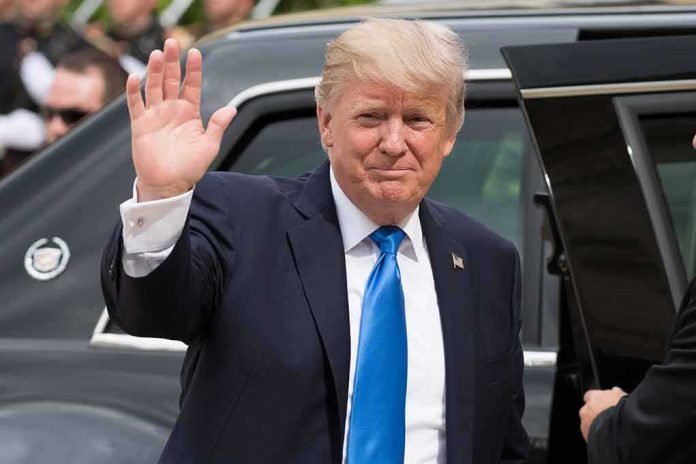
A young American woman trapped in Iran under spying accusations during Biden’s term is finally free after President Trump’s pressure campaign paid off.
Story Snapshot
- Iran has released dual U.S.–Iranian citizen Dena Karari, detained since December 2024 on disputed spying charges.
- President Trump says she is now safely outside Iran and in good condition, calling the move a “gesture of goodwill” from Tehran.
- Karari’s lawyer credits Trump’s “extraordinary and relentless efforts” as key to securing her release.
- The case highlights Iran’s pattern of using Americans as political leverage, a problem that worsened under Biden and continues to test U.S. strength.
Trump Confirms An American Hostage Is Finally Coming Home
President Donald Trump announced this week that an American woman held in Iran since late 2024 has been allowed to leave the country and is now safely out of Iranian reach. Her attorney later identified her as dual U.S.–Iranian citizen Dena Karari, who had been blocked from leaving Iran and accused of espionage. Trump said Karari was “wrongfully detained” and stressed that she is “now safely outside of Iran, and in good condition,” language repeated across major outlets covering the story.
Trump made the announcement on his social media account, where he also thanked Iran for what he called a “gesture of Goodwill.” In the middle of a hot regional war and ongoing U.S. strikes against Iranian targets, that wording matters. It signals that despite tough military action, the Trump administration is still working every angle to bring Americans home. The message also reminded Americans that Karari’s ordeal began under “Sleepy Joe” Biden’s presidency, when Iran felt bold enough to grab yet another U.S. citizen.
What Happened To Dena Karari And Why Her Lawyer Says Charges Were ‘Bogus’
Attorney Jared Genser, a human rights lawyer who has handled past Iran hostage cases, said Karari had been trapped in Iran since December 2024 on “bogus charges.” Reports describe her as being accused of spying or “collaboration with a hostile state,” a common label Iran uses for dual nationals who maintain ties to the West. Genser stated that she was repeatedly interrogated and barred from leaving the country, effectively held hostage without a public, transparent trial or clear evidence of any real crime.
Genser publicly thanked Trump, saying Karari’s freedom “would not have happened but for the extraordinary and relentless efforts of President Donald Trump.” That is a strong statement from a seasoned lawyer who has worked with both Republican and Democrat administrations on similar cases. At the same time, there is still no publicly released Iranian court file showing the exact espionage charges. Media outlets note that Iran has provided no detailed, on-the-record explanation of what she supposedly did, which leaves the spying allegation looking more like political theater than a serious legal case.
Iran’s ‘Hostage Diplomacy’ And How This Case Fits A Troubling Pattern
Karari’s story is not an isolated event; it fits a long pattern of Iran detaining Americans on vague spying claims to gain leverage in negotiations. Analysts describe this as “hostage diplomacy,” where Tehran targets dual nationals, labels them as security threats, and then uses their fate to squeeze concessions from Washington. Since around 2009, at least fifteen American detainees have faced this kind of treatment, often with thin or secret evidence and lengthy detentions that break families and test U.S. resolve.
Past cases include Washington Post journalist Jason Rezaian, held on what his newspaper called “trumped up” espionage charges and freed in a 2016 prisoner swap, and more recent detainees released in a 2023 deal that unlocked about $6 billion in frozen Iranian assets. Under Biden, critics argued that big payouts and soft talk only encouraged Tehran to keep grabbing hostages. Karari’s release during Trump’s second term, without any announced major concession, stands out as a different model—maximum pressure on a hostile regime, paired with firm diplomacy to get an American home.
Why This Matters For American Strength And Conservative Values
For many conservative Americans, the Karari case hits several core concerns at once: national strength, protection of citizens abroad, and refusing to reward rogue regimes. Iran detained an American during Biden’s watch, using vague spying claims and travel bans to turn a family visit into a geopolitical trap. That is exactly the kind of abuse of power and contempt for Western citizens that grows when Washington looks weak or distracted by globalist agendas and endless talks that never lead to real change.
Trump says Iran has released American woman detained since 2024
An American woman held in Iran since 2024 was allowed to leave the country, President Donald Trump and her US-based lawyer said Wednesday.
Trump said the woman, later identified by her lawyer as Dena Karari, had… pic.twitter.com/blkuAQwHgc
— Black Page (@WorldNEWS0_) July 17, 2026
Trump’s team now faces a hard balance. On one side, the United States is carrying out strikes against Iranian military targets, showing force after years of provocations. On the other side, the president is willing to publicly thank Iran when it does the right thing and releases a wrongfully held American. For constitutional conservatives, this mix of strength and targeted diplomacy shows a government focused on protecting its own people without trading away core interests or flooding Iran with cash, as past deals have done.
Sources:
thegatewaypundit.com, nbcnews.com, iranintl.com, theguardian.com, washingtonpost.com, foxnews.com, youtube.com, csis.org, justsecurity.org, pbs.org