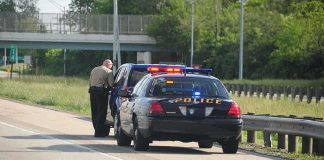
Olympic gold medalist Sha’Carri Richardson’s high-speed Florida arrest reveals a troubling pattern of reckless behavior that puts innocent Americans at risk, proving once again that celebrity status doesn’t excuse lawlessness.
Story Snapshot
- Richardson arrested for driving 104 mph in a 65 mph zone, triggering Florida’s “super speeder” law designed to protect citizens from dangerous driving
- Bodycam footage shows the Olympic sprinter pleading with the officer to avoid jail despite multiple traffic violations including tailgating and unsafe lane changes
- Her boyfriend, fellow Olympian Christian Coleman, was also arrested at the scene for resisting officers
- This marks Richardson’s second arrest in less than a year, following a 2025 domestic violence incident at Seattle-Tacoma International Airport
Florida Officer Stands Firm Against Celebrity Pleas
Orange County Sheriff’s Sgt. Gerald McDaniels arrested Richardson on January 30, 2026, after clocking her at 104 mph on State Road 429 near Winter Garden. Bodycam footage released by the department captured Richardson’s desperate attempt to avoid jail time, claiming she was a law-abiding citizen. The officer remained unmoved, responding bluntly: “That’s why they give you a speedometer. Nothing you say is going to change that. You’re going to jail.” His refusal to bow to celebrity pressure demonstrates proper law enforcement, prioritizing public safety over special treatment for the rich and famous.
Multiple Dangerous Violations Documented
Richardson’s arrest involved far more than simple speeding. Sgt. McDaniels documented a pattern of reckless driving that endangered every motorist on that highway. She tailgated vehicles, passed cars on the inside shoulder, flashed her lights aggressively to force other drivers out of her way, made unsafe lane changes, and cut off the pursuing officer. Richardson offered weak excuses during the stop, claiming her tire pressure was low at 29 PSI and that she accidentally changed her car settings via phone without realizing it affected her speed. These explanations failed to justify behavior that forced the officer to pursue her at speeds exceeding 110 mph.
Super Speeder Law Protects Families on Florida Highways
Florida’s “super speeder” law represents common-sense legislation designed to deter the kind of dangerous driving that kills innocent Americans on our highways. The law specifically targets drivers exceeding 100 mph, imposing enhanced penalties that include arrest rather than just a citation. Richardson’s case demonstrates effective enforcement of this protective measure. Despite her Olympic achievements and public recognition, she received the same treatment any reckless driver deserves. The $500 bond set for her release reflects the seriousness of charges that could result in significant fines, license suspension, or jail time under this law designed to keep families safe.
Boyfriend’s Interference Escalates Scene
Christian Coleman, Richardson’s boyfriend and fellow Olympic sprinter, arrived at the traffic stop in a black Jeep and immediately began defending her dangerous driving. When officers commanded him to identify himself, he refused, resulting in his arrest for resisting law enforcement. Another sprinter, Twanisha Terry, also appeared at the scene and ignored officer commands to return to her vehicle. Both Richardson’s and Coleman’s vehicles were towed following their arrests. This chaotic scene, involving multiple athletes who apparently believed they were above the law, underscores a broader problem of entitled behavior among celebrity figures who think their achievements exempt them from consequences ordinary citizens face daily.
Troubling Pattern of Legal Issues Emerges
Richardson’s Florida arrest is not an isolated incident but part of an escalating pattern. In 2025, she was arrested at Seattle-Tacoma International Airport on domestic violence charges after allegedly pushing Coleman into a column and throwing headphones at him during a TSA checkpoint altercation. Coleman declined to press charges, wanting to move past what he called a “sucky situation.” In 2023, she was removed from a plane under circumstances not fully detailed in available reports. Her athletic career has also faced setbacks, including being barred from the Tokyo Olympics due to a positive marijuana test and failing to qualify for finals at the 2025 World Athletics Championships. This combination of legal troubles and professional failures suggests deeper accountability issues that fame and talent cannot mask indefinitely.
The bodycam footage’s public release serves an important transparency function, allowing Americans to see exactly how law enforcement handled a high-profile arrest. Sgt. McDaniels conducted himself professionally throughout, refusing Richardson’s emotional pleas while maintaining focus on documented violations that made Florida highways unsafe. His approach reflects the principle that no one, regardless of medals or fame, stands above the rule of law that protects law-abiding citizens. Richardson’s attempt to leverage her status and claim she was a law-abiding citizen rang hollow given the officer’s documented observations and her previous legal entanglements, demonstrating why bodycam accountability benefits both officers and the public.
Sources:
‘I’m begging you’: Olympic star’s high-speed Florida arrest caught on bodycam
Bodycam footage released: Sha’Carri Richardson speeding arrest