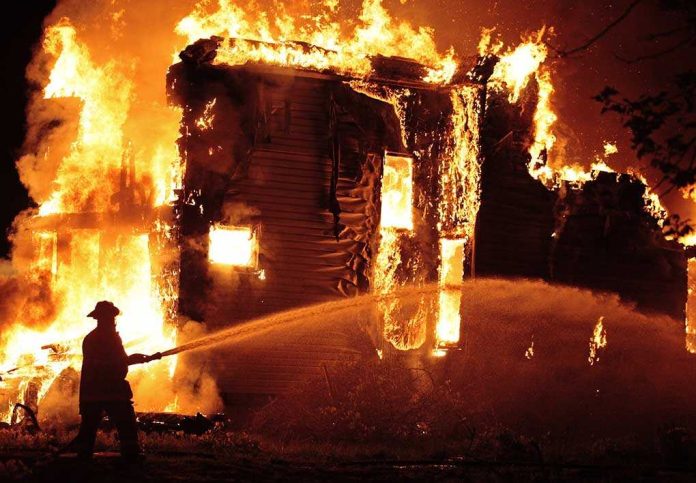
The negligence during the Palisades Fire response, marked by hydrant failures and delayed aid, left communities feeling abandoned, igniting outrage among residents.
Story Highlights
- The Palisades Fire, sparked by alleged arson, devastated Pacific Palisades, Topanga, and Malibu.
- Community outrage fueled by hydrant failures and delayed emergency responses.
- Aid delays and bureaucratic red tape hindered recovery efforts.
- Lawsuits and community activism spotlight systemic failures.
Alleged Arson Sparks Devastation
The Palisades Fire ignited on January 7, 2025, following an alleged arson incident at Skull Rock Trailhead. Arson suspect Jonathan Rinderknecht, an Uber driver, is accused of discarding a cigarette that eventually led to the fire’s resurgence amid severe Santa Ana winds. These conditions rapidly expanded the fire, affecting over 1,262 acres by the afternoon and causing chaos in the Pacific Palisades area.
Governor Gavin Newsom and LA Mayor Karen Bass faced severe public scrutiny for what many residents perceived as inadequate emergency responses. With over 100,000 evacuees, resources were stretched thin, exacerbating the crisis. Reports of hydrant failures further fueled the fire, undermining firefighting efforts and intensifying public frustration.
Systemic Failures and Community Outrage
Community town halls in late January 2025 became a focal point for expressing outrage over the fire response. Residents criticized local and state officials for their slow reaction, citing neglected infrastructure such as firebreaks and hydrants that failed during critical moments. The sentiment of being “left to burn” resonated deeply, highlighting the systemic failures that left communities vulnerable to the devastating fire.
The delays in federal and state aid compounded recovery efforts. FEMA approved assistance by January 15, 2025, but issues at the California Office of Emergency Services (Cal OES) delayed processing. A contractor outage left 80% of uninsured homeowners awaiting damage assessments, further delaying much-needed relief.
Long-Term Impacts and Legal Battles
The aftermath of the Palisades Fire has extended into ongoing legal battles and recovery challenges. Lawsuits against LADWP and LA County highlight the infrastructure failures that contributed to the devastation. In parallel, the distribution of $100 million raised by FireAid concert came under scrutiny, with criticisms that funds were routed to organizations instead of direct victim support.
While the fire’s containment was declared on January 31, 2025, the community faces long-term implications such as toxic soil contamination and insurance disputes. These issues underscore the need for robust infrastructure and emergency preparedness to prevent future tragedies.
Sources:
America First Policy Institute Timeline of Key Events and Failures
LA Times Palisades Fire Timeline
FSRI Timeline: How 2025 SoCal Wildfires Spread and Killed 32