Tesla’s reintroduction of “Mad Max” mode in its Full Self-Driving system has triggered a federal investigation just days after rollout, raising critical questions about whether government regulators are overstepping their bounds to stifle American innovation and technological advancement.
Story Snapshot
- Tesla revived “Mad Max” driving mode in FSD v14.1.2, designed for aggressive lane changes and faster navigation through traffic
- NHTSA launched investigation into 2.9 million Tesla vehicles within days, citing 58 complaints including 14 crashes and 23 injuries
- The mode remains available despite ongoing federal scrutiny that could restrict how Americans use technology they purchased
- Investigation follows pattern of regulatory agencies targeting innovative American companies rather than addressing real safety threats
Innovation Meets Regulatory Roadblock
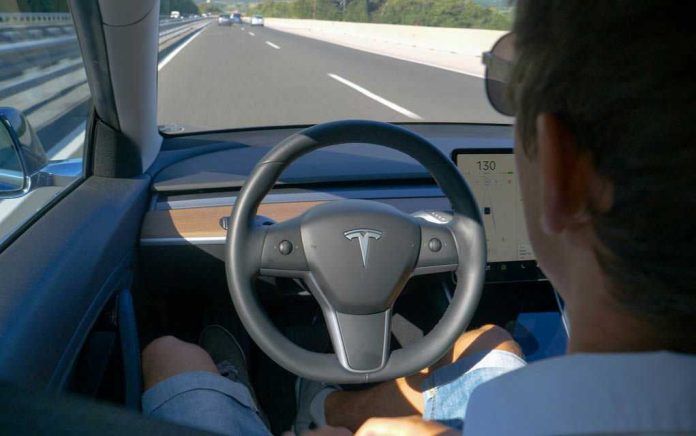
Tesla’s Full Self-Driving system now includes a five-tier personality system where “Mad Max” mode sits at the most assertive end of the spectrum, alongside options like “Sloth” and “Hurry.” The feature prioritizes rapid lane changes to maintain higher speeds, helping drivers navigate congested traffic more efficiently by mimicking human-like agility. This innovation represents exactly the kind of American ingenuity that has made our automotive industry the envy of the world. Yet within days of its release in FSD v14.1.2, federal bureaucrats at the National Highway Traffic Safety Administration jumped into action, launching an investigation that threatens to undermine consumer choice and technological progress.
Tesla revives 'Mad Max' mode in Full Self-Driving https://t.co/0mKrdSmN1D
— ConservativeLibrarian (@ConserLibrarian) October 27, 2025
The NHTSA investigation covers 2.9 million FSD-equipped vehicles based on 58 complaints that resulted in 14 crashes and 23 injuries. While any accident is unfortunate, these numbers need perspective when considering the millions of miles driven daily by Tesla vehicles equipped with advanced safety features that likely prevent far more accidents than they cause. The timing of this investigation raises legitimate concerns about whether regulatory agencies are functioning as safety watchdogs or innovation suppressors, particularly given the previous administration’s hostility toward Elon Musk and companies that don’t toe the line of progressive ideology.
Pattern of Government Overreach
This isn’t the first time federal regulators have set their sights on Tesla’s autonomous driving technology. The NHTSA previously investigated the company’s Smart Summon feature over low-speed parking lot collisions and scrutinized FSD for allegedly running red lights and stop signs. Each investigation creates uncertainty for a company trying to push boundaries and deliver cutting-edge technology to American consumers who want it. The regulatory burden doesn’t just slow innovation—it threatens to hand technological leadership to foreign competitors, particularly China, which operates under fewer restrictions and is aggressively pursuing autonomous vehicle development.
Tesla continues updating its FSD system, with v14.1.4 released to address various issues while maintaining the availability of Mad Max mode. The company has not publicly commented extensively on the investigation beyond acknowledging regulatory scrutiny, though CEO Elon Musk has been vocal about excessive government interference in private enterprise. This represents a crucial test of whether American companies can innovate freely or will be hamstrung by bureaucratic micromanagement that picks winners and losers based on political considerations rather than market performance and genuine safety concerns.
What’s Really at Stake
The broader implications extend far beyond one driving mode in one vehicle system. If regulators can arbitrarily investigate and potentially ban features that consumers voluntarily choose to use, we’re looking at a fundamental erosion of free market principles and personal liberty. Tesla buyers pay premium prices specifically to access advanced autonomous features, understanding both the benefits and limitations. The “Mad Max” mode isn’t forced on anyone—it’s an optional setting that drivers can choose or ignore based on their comfort level and driving preferences.
The investigation’s outcome could set dangerous precedents for autonomous vehicle regulation across the entire automotive industry, potentially stifling American competitiveness in a critical technology sector. Short-term consequences may include restrictions on how Tesla owners can use features they already purchased, while long-term impacts could discourage investment in autonomous technologies and push development overseas. This exemplifies exactly the kind of government overreach that frustrates Americans who believe in individual responsibility, technological progress, and letting the free market—not Washington bureaucrats—determine which innovations succeed or fail based on their actual performance and consumer demand.
Sources:
Tesla’s ‘Mad Max’ FSD Mode Hits Regulatory Snag as NHTSA Begins Investigation
Tesla’s Mad Max Mode Is Being Investigated by the Feds. Here’s Why