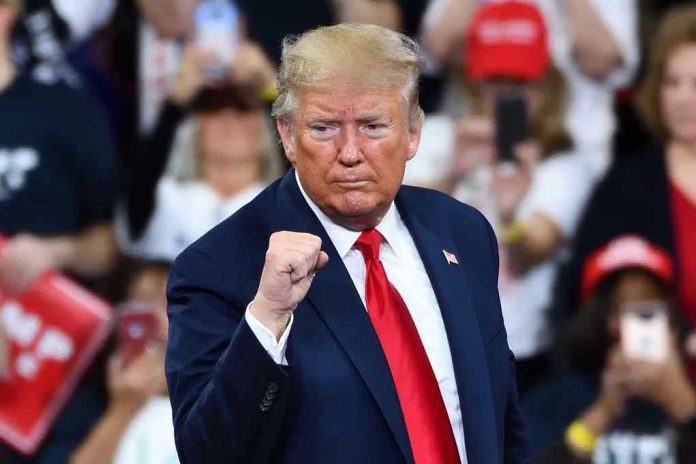
A new wave of controversy arises as House Speaker Mike Johnson passionately defends Trump’s provocative rhetoric, accusing Democrats of subverting military discipline.
Story Snapshot
- Mike Johnson defends Trump’s statements against Democrats.
- Democrats remind military of duty to refuse illegal orders.
- Trump accuses Democrats of sedition on social media.
- Dispute raises concerns about political speech boundaries.
Johnson’s Defense of Trump
House Speaker Mike Johnson has publicly defended former President Donald Trump amidst a heated political controversy. The dispute arose after Trump accused Democratic lawmakers of “seditious behavior punishable by death” for posting a video reminding military personnel to refuse illegal orders. Johnson criticized Democrats, suggesting they were encouraging troops to defy commands, while framing Trump’s rhetoric as a factual definition of sedition rather than a call to violence.
This incident highlights a stark division in American politics, where interpretations of military obedience and presidential authority clash. Johnson, aligning with Trump, emphasizes the need to maintain military discipline, an issue dear to conservatives who prioritize national security.
Democrats, many of whom are military veterans, argue their message aligns with constitutional duties. They remind troops of the legal obligation to refuse unlawful orders, a principle rooted in military ethics and historical precedence. This stance underscores their commitment to upholding constitutional norms, a vital aspect of a functioning democracy.
Partisan Rifts and Rhetoric
The incident underscores deepening partisan divides over the boundaries of political speech. Trump’s accusations against Democrats have sparked significant backlash, with Democrats and some Republicans expressing concern over the violent implications of his rhetoric. House Minority Leader Hakeem Jeffries condemned Trump’s threats, urging Republicans to respond appropriately. The White House, however, has denied any intent by Trump to incite violence against members of Congress.
The situation has also raised security concerns for targeted lawmakers, leading to heightened vigilance by Capitol Police and the House Sergeant at Arms. This development illustrates the broader impact of escalating political rhetoric, which can translate into real-world threats to those involved in the political arena.
Military Obedience and Political Implications
The ongoing debate also touches on the broader issues of military obedience and presidential power. The Democrats’ call to remind troops of their duty to refuse illegal orders is not only a legal stance but a moral one, reflecting the broader constitutional principles that govern military conduct. However, Johnson’s defense of Trump’s rhetoric brings into question the balance of power between Congress and the executive branch.
In the long term, the normalization of violent political rhetoric could erode democratic norms, posing challenges to civil-military relations. As political analysts and military law experts emphasize, the importance of adhering to lawful orders and the risks of politicizing military obedience remain at the forefront of this debate.
Sources:
New Republic: Mike Johnson Defends Trump Against Accusations
AOL News: Johnson Critiques Democrats Over Military Orders
The Week: Trump’s Sedition Accusations and Military Ethics