In a world where peace seems elusive, the Thailand-Cambodia border dispute has once again erupted into violent clashes, claiming the lives of at least 12 soldiers and reigniting deep-seated tensions.
At a Glance
- The border dispute between Thailand and Cambodia centers around the Preah Vihear Temple.
- The conflict has historical roots dating back to shifting territorial control during the Angkor and Ayutthaya periods.
- The most recent clash occurred in May 2025, marking a significant escalation after years of relative calm.
- Both countries have issued strong statements, yet diplomatic solutions remain elusive.
Historical Roots of the Conflict
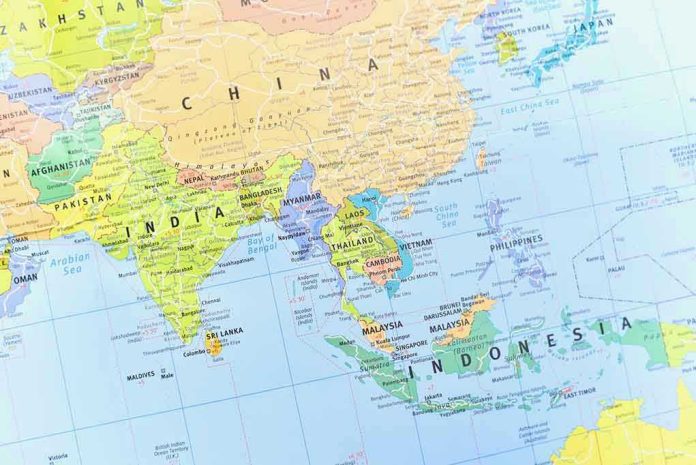
The Thailand-Cambodia border dispute is a long-standing conflict rooted in centuries of historical grievances and shifting territorial control. At the heart of the dispute lies the Preah Vihear Temple, an 11th-century Hindu temple perched on a cliff along the border. This temple, designated a UNESCO World Heritage Site in 2008, has become a symbol of nationalist sentiment and territorial claims for both nations.
The origins of the conflict date back to the Angkor and Ayutthaya periods, when both kingdoms fought for dominance in Southeast Asia. The modern dispute intensified in 1954 when Thai troops occupied the temple after French colonial forces withdrew from Cambodia. In 1962, the International Court of Justice (ICJ) ruled that the temple belonged to Cambodia, but Thailand continued to dispute the surrounding land, arguing that the border demarcation was unclear.
In 2008, tensions escalated when Cambodia sought UNESCO recognition for the temple, leading to military clashes and a prolonged standoff. The conflict flared up again in 2009, 2011, and most recently in May 2025, when a Cambodian soldier was killed in an early morning clash. This incident has raised fears of a return to sustained violence along the border, with both sides maintaining military presences and issuing statements condemning the violence.
Current Developments and Stakeholders
The recent escalation in violence has drawn attention to the complex web of stakeholders involved in the conflict. The governments of Cambodia and Thailand are the primary actors, with their respective militaries and foreign ministries directly involved in border security and negotiations. International bodies such as the United Nations and UNESCO have been drawn into the dispute, particularly regarding the temple’s heritage status and calls for peacekeeping. The International Court of Justice has issued rulings on the temple’s sovereignty and interpretation of border treaties, while the Joint Boundary Commission (JBC) was established in 2000 to facilitate bilateral resolution of border issues. However, the JBC has had limited success, and the latest meeting in June 2025 produced no substantive progress.
Civilians living near the border are often displaced or economically impacted by the conflict. Both countries seek to assert sovereignty over resource-rich and culturally important areas, exacerbating the dispute with differing interpretations of historical maps and treaties. Nationalist rhetoric often inflames public opinion, making diplomatic resolution challenging. The relationship between the two countries is asymmetrical, with Thailand possessing greater military and economic power, but Cambodia leveraging international legal and diplomatic channels. Domestic politics in both countries, including the potential for military intervention in Thailand, play a significant role in shaping the conflict’s trajectory.
Impacts and Expert Perspectives
The violence disrupts local communities, threatens regional stability, and strains bilateral relations. In the short term, civilians in border areas face displacement, loss of livelihood, and exposure to violence. Both militaries suffer casualties, and the broader populations are affected by nationalist rhetoric and potential economic sanctions. Economically, border trade is disrupted, affecting local economies, while tourism to the temple and surrounding areas declines during periods of tension. Socially, communities are divided, and trust between the two nations erodes. Humanitarian concerns arise from displacement and restricted access to services.
Experts note that the dispute is as much about domestic politics as it is about territory. Rath Pichanvorlak of the Royal University of Phnom Penh warns that the Thai military could allow tensions to escalate to justify political interventions, such as coups. This reflects a pattern where border disputes are leveraged for internal political gain. Scholars highlight the role of historical grievances, cartographic ambiguities, and the failure of bilateral mechanisms like the JBC to produce lasting solutions. Neutral analysts call for confidence-building measures and third-party mediation to break the cycle of violence.
Sources:
Wikipedia – Cambodian–Thai Border Dispute
TIME – Thailand-Cambodia Border Dispute
Wikipedia – Cambodia–Thailand Relations
Stanford University – Thailand and Cambodia: The Battle for Preah Vihear