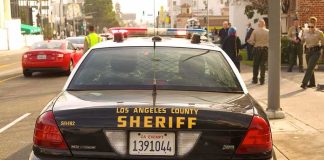
Five people died in minutes at San Diego’s largest mosque, but what officials chose to say in the next hour may shape America’s debate over hate, safety, and trust in government for years.
Story Snapshot
- Two teenagers opened fire at the Islamic Center of San Diego, killing three men before taking their own lives.[1][2]
- Police labeled it a possible hate crime “until it’s not,” while the Federal Bureau of Investigation (FBI) joined the probe.[1][4]
- A security guard died while protecting worshipers, drawing praise as a hero who likely saved lives.[2]
- Officials insist the community is safe and supported, even as motives and warning signs remain disturbingly unclear.[1]
How A Monday Morning Turned Into A Mass Killing
San Diego police say the first 911 calls from the Islamic Center of San Diego came late Monday morning, reporting an active shooter at the county’s largest mosque and Islamic school.[1] Within minutes, officers arrived to find three adult men dead on the grounds; the victims included the center’s longtime security guard, who confronted the attackers.[1][2] Not long after, officers discovered a nearby car with two teenage males inside, both dead from what authorities say were self-inflicted gunshot wounds.[1][2][4]
Officials later identified the suspects as 17 and 18 years old, describing them as armed with rifles and enough ammunition to kill many more.[2] Police had already heard about at least one of them that morning; a woman called to report her teenage son as a runaway and possibly suicidal, a detail that will haunt investigators as they map the day’s timeline.[2] Authorities say there is no evidence of additional suspects and have repeatedly told the public that “there is no further threat.”[1][3][4]
Why Police Called It A Hate Crime “Until It’s Not”
San Diego Police Chief Scott Wahl did not dance around the setting. Standing beside the imam and the mayor, he said that “because of the Islamic Center location, we are considering this a hate crime until it’s not,” and that investigators would work closely with the FBI.[1][4] That phrase carries legal and political weight. Hate crime status affects charging decisions, federal involvement, and the signal government sends to targeted communities already feeling vulnerable.[1][4]
Reporters soon learned that investigators were reviewing writings allegedly left by the shooters and that some anti-Islam themes may have been found in their car.[2] That is the kind of detail that fuels instant online verdicts. Yet officials kept their language cautious, emphasizing that the evidence was preliminary and the case remained in early stages.[1][4] From a common-sense, conservative perspective, that caution looks appropriate: motive should be proven, not presumed, even in a moment of understandable outrage.
The Security Guard’s Final Stand And The Question Of Preparedness
While politicians debated terminology, one detail cut through the noise: the security guard died facing the gunmen. Police leaders publicly called his actions “heroic” and said he “undoubtedly saved lives,” because his intervention slowed the attackers and gave families and staff precious seconds to flee or hide.[2] That one man’s courage illustrates a hard reality: when evil walks onto a campus, the first five minutes belong to whoever is already there, not to distant specialists.
https://twitter.com/Hak_2861/status/2056734669412909468
Officials highlighted the quick police response, crediting officers and tactical teams with preventing further carnage.[1][3] From a public safety lens, the picture is mixed. On one hand, a private guard and fast-moving officers likely kept the death toll lower. On the other, two teenagers still managed to reach a major religious center armed and ready. That combination raises uncomfortable questions about hardened targets, school-style security at faith institutions, and whether early warning signs ever trigger action.
Grief, Politics, And The Battle Over Narrative
In the hours after the shooting, elected officials and faith leaders rushed to microphones to denounce the attack and declare that “hate has no home in San Diego.”[3][4] Los Angeles Mayor Karen Bass called the murders “outrageous and heartbreaking,” especially happening on a significant day in the Islamic calendar.[3] The imam of the Islamic Center described “unprecedented” levels of hate and intolerance and urged the city not to treat this as an isolated outburst. Their message: this was not just tragedy, but symptom.
For many Americans, especially on the right, the concern is double-edged. On one side lies a clear moral duty to protect religious liberty and condemn violence against any house of worship—mosque, church, synagogue, or temple. On the other lies a suspicion that some leaders will rush to fold this horror into a broader narrative about speech, gun ownership, or political opposition. The most responsible approach demands two things at once: unapologetic sympathy for victims and a disciplined insistence on facts over slogans.
What This Says About Safety, Community, And Trust Going Forward
Parents who sprinted to the scene heard officials repeat a simple reassurance: all children were safe, and the immediate threat was over.[1][3] That message mattered; families had watched too many school and synagogue shootings end in far worse numbers. Yet reassurance is not the same as resolution. Investigators still have to answer what drove two teenagers to target a mosque, how they obtained their weapons, and whether anyone missed glaring warning signs.[1][2][4]
The deeper test will come months from now, after the cameras leave. If investigators substantiate a hate motive, prosecutors must treat it with full seriousness, not as a talking point.[1][4] If, instead, the story turns out more tangled—mental health, online radicalization, personal grievance—officials will have to correct course publicly, not quietly bury early “hate crime” language. A healthy republic owes both to its Muslim neighbors and to its own sense of justice: equal protection, clear-eyed truth, and the courage to say “we were wrong” when the evidence demands it.
Sources:
[1] Web – San Diego shooting: 5 dead in mosque attack; anti-Islam … – LA Times
[2] Web – Suspects killed in Islamic Center of San Diego shooting | KTVU FOX 2
[3] Web – Mayor Bass Releases Statement on Deadly Attack at Islamic Center …
[4] YouTube – Mayor, Imam speak at press conference with Police, FBI