Vice President JD Vance led a federal move to freeze green-card sponsorships for Microsoft, Adobe, and six major outsourcing firms, citing visa abuse that put American workers at risk.
Story Snapshot
- The Labor Department halted new and pending PERM cases tied to Microsoft, Adobe, and six IT outsourcing giants.
- Vance said layoffs at Microsoft occurred while the firm pursued visas and green cards for foreign hires.
- Nine elite universities face probes for alleged misuse of exchange-visitor visas to undercut wages.
- The action fits a long fight over whether H-1B and PERM help or hurt U.S. workers.
Administration Freezes PERM Filings for Tech and IT Outsourcing Firms
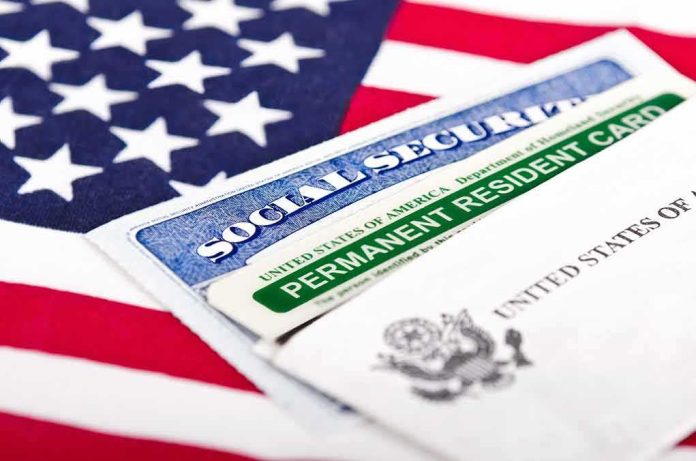
The Department of Labor paused permanent labor certification processing for Microsoft, Adobe, Cognizant, Infosys, Tata, Wipro, HCL, and Capgemini. Labor Secretary Keith Sonderling said the government will not accept new or process pending applications linked to these companies while probes continue. The move targets the key step many employers use to sponsor green cards through jobs. The action follows months of scrutiny on how companies mix layoffs, H-1B visas, and green-card filings.
Vice President JD Vance said Microsoft topped the government’s concerns. He argued Microsoft laid off thousands of American workers while benefiting from large numbers of H-1B visa approvals and active PERM cases. Officials said the goal is to protect U.S. wages and stop what they called program abuse designed to replace or undercut domestic workers. Microsoft and Adobe remain under investigation, while several large outsourcing firms face the same PERM freeze across new and pending filings.
Universities Face Separate Probe Over Exchange-Visitor Visas
Federal officials also opened investigations into nine universities, including Harvard, Yale, Stanford, Brown, the University of Pittsburgh, the University of California, Davis, the California Institute of Technology, Arizona State University, and the Massachusetts Institute of Technology. The probes center on possible misuse of exchange-visitor visas to fill roles at lower pay, which could depress local wages. The administration framed this as part of a wider effort to confront fraud risks across employment and academic visa channels.
Government watchdogs have warned for years that these visa systems are vulnerable. The Department of Labor’s Office of Inspector General flagged the permanent labor certification program and the H-1B system as highly susceptible to fraud and noncompliance. A benefit fraud and compliance assessment by U.S. Citizenship and Immigration Services previously found a notable rate of fraud and technical violations in H-1B petitions, supporting calls for stronger verification and enforcement. These findings help explain the current push for broader oversight.
Why the PERM and H-1B Programs Spark Bipartisan Frustration
For decades, the H-1B and PERM debate has followed the same lines. Worker advocates claim some employers structure hiring to screen out qualified Americans, then pay lower wages to foreign hires. Employers say the programs fill genuine skills gaps and keep key work in the United States. Past cases and reporting have detailed tactics like multiple H-1B lottery registrations and underpayment risks that can tilt the market. These tensions set the stage for today’s crackdown.
BREAKING: MASSIVE U.S. CRACKDOWN ON IT OUTSOURCING & IMMIGRATION
The Trump administration’s Department of Labor (DOL) has just executed an unprecedented, immediate freeze on the Permanent Labour Certification Program (PERM) for eight of the world's largest technology and IT…— IntellectAnchor (@Intellectanchor) October 8, 2026
Many readers on both the right and left see a deeper pattern. They believe powerful interests use complex rules to cut corners while Washington looks away. Today’s action signals the opposite: the federal government moved fast and broadly, naming top brands and elite schools. Supporters will call this overdue protection for U.S. workers. Critics may worry about disruption for lawful immigrants and employers who follow the rules. The facts show this is a targeted enforcement wave, not a blanket ban.
What Changes Now for Workers, Students, and Employers
Companies named in the freeze cannot file new or advance pending permanent labor certifications tied to the action. That slows the green-card path for affected employees and could delay projects that rely on those roles. Universities under review may face tighter audits and compliance steps for exchange-visitor placements. Employers not named should expect closer checks on recruiting, wage levels, and layoffs that align with visa filings. Agencies signaled they plan more cross-checks and joint investigations.
Bottom line for workers: expect companies to post clearer job ads, document fair pay, and prove real efforts to hire Americans. Bottom line for employers: assume labor and immigration agencies will compare layoff data, payrolls, and visa activity. Bottom line for students and scholars: schools will need stronger oversight of training programs. The government’s message is plain and tough. Rules must match reality on the ground, or filings will stall and cases will face sanctions.
Sources:
twitchy.com, reuters.com, news18.com, cnn.com, lawcommentary.com, washingtontechnology.com, foxbusiness.com, newindianexpress.com, centraloregondaily.com, indianexpress.com, i-9intelligence.com, spectrumlocalnews.com