Tehran’s latest move—asking youths and students to physically “shield” power plants ahead of a Trump deadline—turns civilians into bargaining chips in a high-stakes standoff over the world’s most important oil chokepoint.
Quick Take
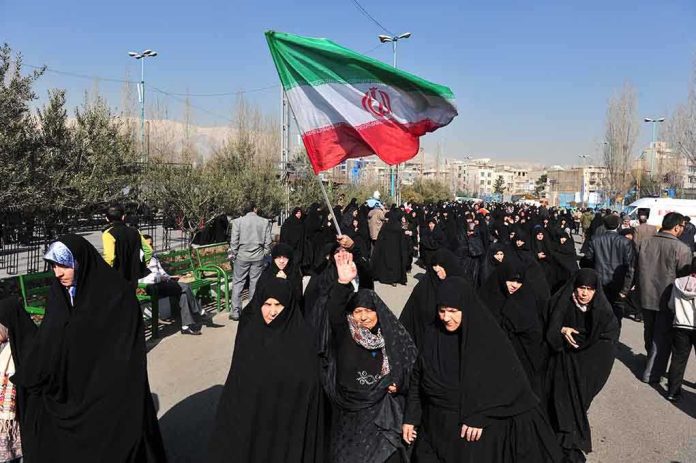
- Iran’s Ministry of Sports and Youth publicly called for “human chains” around power plants and energy facilities timed to a U.S. ultimatum tied to reopening the Strait of Hormuz.
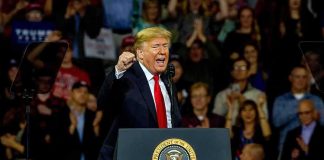
- President Trump has threatened strikes on Iranian power plants and bridges if the strait remains closed, raising the stakes for energy markets and regional stability.
- Iran has framed the mobilization as “symbolic,” but the targeting of “youth” and “students” collides with concerns about coercion and the use of civilians as human shields.
- U.S. and Israeli strikes in the run-up to the deadline have already produced reported civilian casualties, intensifying the propaganda and legal warfare surrounding “dual-use” targets.
Tehran’s “Human Chain” Call Puts Civilians at the Center of Military Deterrence
Iranian state-linked outlets reported that the regime’s Ministry of Sports and Youth called on youths, athletes, artists, and students to form human chains around power plants and key energy facilities beginning Tuesday, April 7, 2026, at 2 p.m. local time. Iranian officials portrayed the action as a youth-driven, symbolic show of unity. The timing appears calibrated to land hours before President Donald Trump’s stated deadline tied to reopening the Strait of Hormuz.
Even without independent confirmation of how many people will show up or whether the “human chain” becomes physical shielding, the message is strategic: Iran is signaling that attacks on infrastructure could be visually and politically linked to civilian crowds. In modern conflict, that kind of imagery can shape global opinion faster than any briefing. For American audiences who prioritize clear rules and accountability, the core question is whether a government has the moral right to position civilians near potential targets at all.
Trump’s Ultimatum and the Strait of Hormuz Raise Economic Stakes Beyond the Battlefield
President Trump’s warning about striking Iranian power plants and bridges is tied to the Strait of Hormuz, the narrow route through which a large share of globally traded oil must pass. When Iran restricts that passage, the effects are not theoretical: energy prices and shipping risk can spike quickly, filtering into higher costs for families and businesses. In that sense, the confrontation is as much about economic security as it is about military leverage.
Republicans who argue for strong deterrence see a straight line from keeping sea lanes open to keeping inflation pressures down at home. Democrats, meanwhile, often emphasize restraint and humanitarian risk, especially when civilian casualties are reported. The practical reality is that both concerns can be true at once: the U.S. can have a legitimate interest in preventing an oil chokepoint from being held hostage, while also needing disciplined targeting and clear communication to avoid civilian harm and escalation.
Civilian Casualties, Dual-Use Targets, and the Propaganda War
Reports in late March described a deadly U.S. strike on a school in Minab, with large numbers of children among the dead, allegedly connected to flawed or outdated intelligence about a nearby military site. Amnesty International publicly described the strike as unlawful and called for accountability. Separately, reporting described Israeli strikes on Tehran and transportation infrastructure, with accounts that children were killed. Those episodes matter now because they provide Tehran ready-made material to frame future strikes as “war crimes.”
What’s Known, What’s Unclear, and Why the “Human Shield” Question Matters
Multiple outlets have reported the human-chain call as authentic and tied to regime messaging through Nour News and state television, but there is limited verified detail about participation, enforcement, or whether children will be placed in front of facilities. Some reports and commentary broaden the context to paramilitary recruitment and youth mobilization, including claims about minors in militia structures. What can be said with confidence is that the regime is publicly urging “youth” and “students” toward potential targets—an approach that heightens risk.
For Americans already skeptical that powerful institutions tell the full truth, the episode is a reminder that information warfare is baked into modern conflict. Tehran can attempt to deter strikes by surrounding infrastructure with civilians; Washington can attempt to restore deterrence by maintaining credible deadlines; and ordinary people—Iranians on the ground and families watching gas prices at home—absorb the consequences. If the U.S. is drawn into broader escalation, citizens should demand transparent objectives, lawful targeting, and a plan that protects American interests without rewarding cynical tactics.
Sources:
Iran war live updates: Trump deadline, power plants, human chains, Israel train strikes