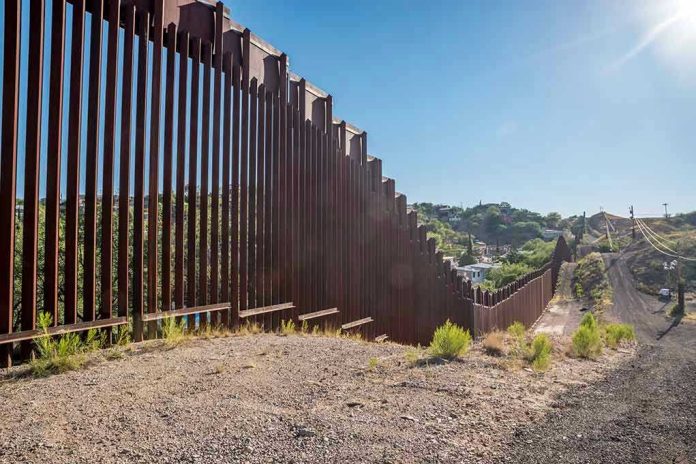
The Department of Homeland Security is deploying hundreds of AI-powered surveillance towers along America’s borders that can operate autonomously without human oversight, tracking and recording Americans’ movements with facial recognition technology while expanding this same surveillance apparatus into the interior of the United States.
Story Snapshot
- DHS awarded $1.8 billion in contracts to deploy 542 new AI surveillance towers and modernize 348 existing towers by 2030, creating the most sophisticated border monitoring system in U.S. history
- New mobile surveillance systems feature autonomous AI that detects motion miles away, retains video data for at least 15 days with deletion locked “under any circumstances,” and operates without agents present
- ICE now uses facial recognition technology originally designed for border enforcement to identify U.S. citizens during interior enforcement operations, expanding surveillance beyond borders
- Congress allocated $160 billion for immigration enforcement through Trump’s legislative agenda, representing a 65% funding increase for DHS operations
Autonomous AI Surveillance Expands Across Borders
DHS contracted General Dynamics Information Technology, Advanced Technology Systems Co., and Elbit Systems of America to install integrated surveillance towers across southern and northern border regions. The Modular Mobile Surveillance System mounts AI-powered observation towers on standard 4×4 vehicles, equipped with radar and high-powered cameras capable of detecting motion several miles away. The system’s artificial intelligence pinpoints target locations within 250 feet of actual position, using computer vision technology originally developed for military combat drones to distinguish between people, animals, and vehicles by analyzing thousands of images frame by frame.
These surveillance systems operate in two modes: attended with agents present and unattended with autonomous AI conducting surveillance without human oversight. All collected video, maps, and sensor data receives classification as Controlled Unclassified Information, with retention requirements of at least 15 days and deletion prevention protocols regardless of circumstances. Anduril Industries has deployed hundreds of autonomous surveillance towers for Customs and Border Protection since 2019, establishing the foundation for this expanding network. The contract timeline extends through May 2030 with multiple purchase agreements lasting up to 10 years beyond initial deployment.
Facial Recognition Moves Beyond Border Enforcement
ICE agents increasingly use Mobile Fortify, an AI facial recognition tool initially developed for CBP border operations, to conduct interior enforcement activities including identifying U.S. citizens during enforcement actions. The New York Times reported in February 2026 that ICE agents employed facial recognition to identify American citizens, raising concerns about surveillance of lawful residents without explicit consent or probable cause. WIRED investigations revealed DHS uses this facial recognition technology for identity verification tasks beyond its original design parameters, creating accuracy and reliability concerns about potential misidentification of citizens.
Beryl Lipton, senior investigative researcher at the Electronic Frontier Foundation, emphasized that border enforcement operations extend far beyond geographic boundaries and crossing moments. The EFF challenges DHS classification of detection-only systems as non-rights-impacting, noting autonomous towers capture high-resolution images the government could analyze indefinitely after collection. This capability transforms passive detection systems into active surveillance tools with implications for constitutional protections against unreasonable searches, particularly when combined with biometric identification databases accessible across federal agencies.
Questions Remain About Effectiveness and Oversight
DHS Secretary Kristi Noem attributes current border crossing rates at 50-year lows to increased enforcement and deterrence campaigns, yet policy analysts question surveillance infrastructure’s specific contribution to these outcomes. Kathleen Bush-Joseph, policy analyst at the Migration Policy Institute, acknowledged infrastructure can strategically funnel crossings toward agent locations but noted dominant drivers for reduced crossings include increased Mexican enforcement and Trump administration deterrence campaigns rather than technological surveillance systems themselves. This analysis suggests billions in surveillance spending may produce marginal security improvements compared to diplomatic and enforcement policy changes.
Environmental organizations and Native American tribes oppose surveillance infrastructure expansion due to impacts on endangered wildlife including wildcats and bears, disruption of water flows during seasonal rains, and degradation of protected natural areas. Big Bend’s designation as having the nation’s darkest skies faces threat from planned stadium-style floodlights accompanying tower installations. The broader surveillance network now includes tethered aerostats hovering thousands of feet over desert regions, unattended ground sensors detecting footsteps, and license plate scanners disguised as traffic cones, creating comprehensive monitoring capabilities across border regions and increasingly throughout interior communities.
The $160 billion congressional allocation through the “One Big Beautiful Bill” represents the largest DHS expansion in agency history, prioritizing technological surveillance solutions over alternative border security approaches. Defense contractors securing multi-year contracts worth billions benefit economically from this surveillance expansion, while questions persist about constitutional implications of autonomous AI systems making surveillance decisions without human oversight, data retention policies preventing deletion regardless of circumstances, and facial recognition deployment against American citizens in interior enforcement operations far removed from border security justifications.
Sources:
DHS CBP Integrated Surveillance Tower Contract – GovConWire
DHS Seeks AI-Powered Mobile Surveillance Trucks for Border – TechBuzz.ai
AI Texas ICE MN Tech – The Marshall Project