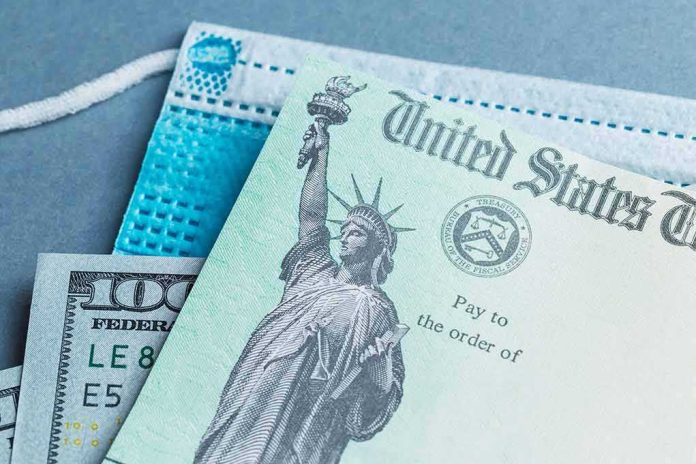
President Trump’s administration began mailing $500 refund checks to nearly 1 million Americans, returning money it says was overcollected through Affordable Care Act marketplace fees.
Story Highlights
- Treasury is sending $500 checks to about 950,000 people in 30 states using HealthCare.gov.
- Refunds are tied to a surplus of marketplace “user fees,” not a new benefit.
- Most recipients bought coverage without premium subsidies, often paying full cost.
- Checks begin arriving in October 2026 and include letters signed by President Trump.
Who Is Getting the $500 Checks and When They Arrive
The White House announced that nearly 1 million Americans will receive a $500 refund, with checks beginning in October 2026. Treasury started distribution to about 950,000 people across 30 states that use the federal HealthCare.gov marketplace, not state-run exchanges. Outlets reported the first batches going out this week, confirming the timing and scope of the rollout. Each check is accompanied by a letter signed by President Trump, highlighting the administration’s action to return funds.
Eligibility centers on people who purchased Affordable Care Act coverage without premium subsidies, including many who paid full price. Reports describe refunds aimed primarily at those earning more than 400 percent of the federal poverty level, plus some between 100 percent and 400 percent who did not receive subsidies. The White House framed the action as direct relief for families who carried the full weight of rising premiums and marketplace costs in recent years.
Why Only 30 States and What “User Fee” Refund Means
The payments are limited to residents of states that rely on the federal HealthCare.gov exchange. People in states with their own exchanges are not included because the fees and accounting flow through separate systems. The administration says the refunds come from a surplus of marketplace “user fees,” which are charges on insurers that help fund the federal exchange’s operations and are commonly passed through to consumers in premiums. The White House labels the excess amounts as overcharges due back to affected customers.
Reports estimate the total payout for this program at around $500 million, reflecting the scale of the surplus now being released to consumers. This approach tracks a long-running pattern in health policy. When exchange finances collect more than needed, leaders can treat the difference as either a cushion for future costs or as funds to return to consumers. President Trump’s team is opting to cut checks now and target those who did not get premium help under the Affordable Care Act.
How the Refunds Align with Conservative Priorities
President Trump’s move prioritizes people who paid the full freight for coverage, many of whom do not qualify for subsidies. That group often feels squeezed by high premiums and high deductibles. Returning excess fees respects taxpayers and reins in a federal program that collected more than it needed. It channels relief straight to households rather than to bureaucracy. It also makes a clear point: when government overcollects, it should give the money back, not grow the program.
The refunds land as the cost of living remains a top concern for families. A $500 check will not fix health care, but it will help with groceries, gas, or a month of utilities. For many readers, this is the kind of practical step Washington should take more often—audit the books, admit when fees overshoot, and return surpluses to the people who paid them. The administration’s framing underscores that this is a refund of fees, not a new entitlement.
Election-Year Timing and What We Still Do Not See
Newsrooms noted the timing before the 2026 midterms and observed that many included states are political battlegrounds. That lens will color reactions, but it does not change the core facts: checks are going out, they are $500 per eligible person, and they are funded by a stated user-fee surplus. One standard caveat applies: public materials do not include the underlying accounting worksheets that detail how each recipient’s eligibility was determined.
President Trump is sending $500 refund checks to nearly 1 million Americans after his administration says they were overcharged through the Affordable Care Act's federal insurance exchange.
"That money belongs to hard-working Americans, not the Government, and now I'm returning… pic.twitter.com/uiWLjfPql2
— Fox News (@FoxNews) October 3, 2026
For families asking what to do next, watch your mail for an official Treasury envelope and a letter from President Trump. If you bought Affordable Care Act coverage on HealthCare.gov without premium help, you are in the likely group. If your state runs its own marketplace, you are outside this federal refund. If you have questions, contact your insurer or the federal marketplace call center to confirm your enrollment type and whether your household qualifies based on these rules.
Sources:
facebook.com, washingtonpost.com, whitehouse.gov, reuters.com, foxnews.com, cnn.com, investopedia.com, cnbc.com