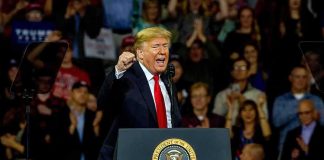
After years of watching “inclusion” rules rewrite common sense, the U.S. Olympic movement just drew a hard line—raising a bigger question: who gets to set the rules for American sports, and by what authority?
Story Snapshot
- The U.S. Olympic and Paralympic Committee updated its athlete safety policy on July 21, 2025 to bar transgender women from women’s Olympic sports.
- The policy aligns with President Trump’s Executive Order 14201, signed February 5, 2025, and took effect August 1, 2025.
- USOPC centralized enforcement, removing discretion from individual national governing bodies and pointing to “federal expectations.”
- The decision escalates an already heated national fight over Title IX, sex-based categories, and eligibility rules ahead of the 2028 Los Angeles Games.
USOPC’s policy change locks in a nationwide standard
The U.S. Olympic and Paralympic Committee revised its “athlete safety policy” on July 21, 2025, effectively banning transgender women from competing in women’s Olympic sports under the U.S. umbrella. The shift is not a sport-by-sport tweak; it removes decision-making from individual national governing bodies and replaces it with a single compliance-driven standard. The new approach became fully effective August 1, 2025, with USOPC notifying affiliates to follow the updated rule.
USOPC framed the change as an obligation to comply with federal expectations after President Trump’s Executive Order 14201 directed restrictions on transgender participation in girls’ and women’s sports, including related spaces and activities. That executive order, signed February 5, 2025, also signaled a broader federal posture: use government leverage to pressure institutions, regulators, and—through diplomatic channels—even international sports bodies that control Olympic eligibility standards.
How the IOC’s evolving rules set the stage for today’s conflict
The fight did not begin with Trump or USOPC. Olympic policy on sex categories has shifted for decades, starting with sex verification practices introduced in 1968 and later replaced with medical and endocrine frameworks. In 2003, the International Olympic Committee allowed participation for post-operative transsexual athletes under strict conditions, including surgery and hormone therapy. By 2015, the IOC moved toward testosterone thresholds, and by 2021 it pushed more decisions down to individual sports while cautioning against presuming advantage without evidence.
Those changing global standards helped create today’s messy reality: some sports tightened restrictions due to safety concerns, while others operated under inclusion frameworks that critics say were too permissive. Research cited in the provided materials notes the debate over whether observed performance outcomes justify broad bans, with some arguing the evidence does not show domination in recent Games, while others maintain biological differences matter for fair competition and athlete safety. The sources do not offer a single, universally accepted metric that ends the dispute.
Federal leverage, Title IX shifts, and the new enforcement model
USOPC’s decision lands in a wider 2025 policy environment. The Education Department’s Title IX approach changed in January 2025 to exclude gender identity, and the NCAA announced a ban on transgender women in February 2025. Against that backdrop, the USOPC approach is important not only for Olympic pathways, but for how authority is exercised: it centralizes enforcement and ties compliance to federal expectations. That structure matters to conservatives who worry about rulemaking by bureaucratic pressure rather than transparent legislation.
At the same time, the sources highlight ongoing legal and political escalation, including the Trump administration suing California over a transgender athlete’s participation in state championships. Supporters of the USOPC move argue it restores sex-based categories and protects women’s opportunities, while opponents call the ban “alarming” and criticize a blanket approach that does not evaluate sport-specific evidence. What is clearly documented is the enforcement direction: institutions are being told to align or face consequences.
What this means heading toward the 2028 Los Angeles Olympics
With Los Angeles hosting the 2028 Games, U.S. policy now collides directly with international governance. The executive order’s reported direction to influence the IOC and address foreign transgender entrants suggests the administration wants rules aligned beyond U.S. domestic competition. That could increase friction with international bodies that have leaned toward sport-by-sport standards. The research provided does not confirm how the IOC will respond, only that the U.S. is applying pressure and setting a domestic baseline.
For conservative voters—especially those already tired of culture-war whiplash—the practical takeaway is that the same government power used to enforce “woke” policies can also be used to roll them back, depending on who holds the pen. The sources document a clear policy victory for sex-based women’s sports, but they also show a governance model built on federal expectations, funding leverage, and centralized control. That tension will shape the next round of lawsuits and rule changes.
Transgender Women Banned From Competing in the Olympics https://t.co/aUHvB4X1F6
— Jack Furnari (@jackfurnari) March 26, 2026
Limited data is available beyond the August 2025 implementation window in the provided research, so the clearest near-term conclusion is procedural: USOPC has adopted an absolute restriction for women’s categories under its jurisdiction, and it is doing so in explicit alignment with the Trump administration’s 2025 executive actions. The longer-term question—whether international rules converge with the U.S. approach before 2028—remains open based on the sources provided.
Sources:
Sport timeline: how did we get here?
Impact of Trans Sports Ban Executive Order
The History of Transgender Athletes in Sport
U.S. Olympic Committee’s new transgender athlete ban highlights changing policy landscape
Transgender women banned from women’s Olympic sports
Youth: Sports Participation Bans