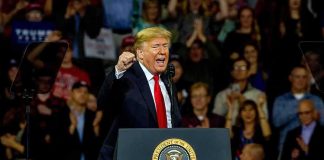
President Trump’s sweeping executive order on college athletics threatens to cut federal funding to universities, escalating an already explosive legal battle over who controls college sports.
Story Snapshot
- Executive order mandates five-year eligibility limits, one-transfer rule, and bans booster pay-for-play collectives, with enforcement set for August 1, 2026
- Federal agencies including Education, DOJ, and FTC directed to withhold funding from non-compliant universities
- Second attempt after July 2025 executive order failed to curb NIL chaos threatening non-revenue sports programs
- Power conferences welcome intervention but demand congressional action to provide durable antitrust protections
Federal Hammer Swings at NCAA Chaos
President Donald Trump signed an executive order titled “Urgent National Action to Save College Sports” on April 3, 2026, imposing federal mandates on NCAA eligibility rules after the governing body failed to control the fallout from Name, Image, and Likeness deals. The order directs multiple federal agencies to enforce a five-year eligibility cap, restrict athletes to one penalty-free transfer, and ban third-party booster collectives from paying athletes. Universities refusing compliance face potential cuts to federal grants and contracts. This represents the administration’s second attempt to intervene in college athletics, following a July 2025 order that produced no meaningful results.
Why the First Executive Order Failed
Trump’s initial executive order in July 2025 aimed to curb pay-for-play schemes but lacked enforcement mechanisms and ignored the NIL framework altogether. The order focused narrowly on prohibiting third-party payments without addressing the broader structural problems created by the 2021 Alston v. NCAA Supreme Court ruling, which dismantled amateurism restrictions. Booster-funded collectives continued operating unchecked, unlimited transfers destabilized rosters, and lawsuits over revenue-sharing and athlete employment status multiplied. The administration’s funding threats in other policy areas, such as the Harvard antisemitism case, have been blocked by federal courts, raising questions about whether this new order will suffer the same fate.
What’s Actually at Stake
College athletics represents a four-billion-dollar scholarship system supporting over 500,000 student-athletes across the country. The explosion of NIL deals and unlimited transfers has created financial chaos threatening women’s sports and Olympic programs that don’t generate television revenue. Power conference leaders attended a White House roundtable in early March 2026, pleading for federal intervention to save programs facing elimination due to resources being diverted to football and basketball. Trump acknowledged the legal risks, stating at the roundtable, “We’ll get sued, but it will solve every problem.” The order protects revenue-sharing for non-revenue sports and establishes an agent registry to prevent exploitation of athletes by unscrupulous representatives.
Deep State Meets Deep Pockets
The executive order exposes a fundamental problem plaguing American institutions: unelected bureaucrats and wealthy boosters controlling outcomes while ordinary citizens suffer the consequences. Booster collectives have transformed college athletics into a bidding war where seven-figure deals flow to teenagers, while universities slash wrestling, swimming, and track programs to balance budgets. Federal agencies now tasked with enforcement—GSA, Education, FTC, and DOJ—will evaluate university compliance and potentially restrict funding, inserting Washington deeper into an area traditionally governed by educational institutions. Power conferences praised the order but emphasized that only Congress can provide lasting solutions through legislation like the SCORE Act, which would grant the NCAA limited antitrust protection. Senator Maria Cantwell noted the order signals congressional urgency but doesn’t address employment status or television contract revenue distribution.
Legal War Heats Up
Trump’s directive sets an August 1, 2026 implementation deadline for new NCAA rules, but legal challenges appear inevitable. The House v. NCAA settlement already commits the organization to 2.8 billion dollars in backpay to former athletes, while ongoing litigation challenges whether athletes should be classified as employees. The executive order doesn’t resolve these fundamental questions about revenue-sharing or employment status, creating potential conflicts with existing court proceedings. Universities dependent on federal research grants, student aid, and contracts face a difficult choice: comply with federally mandated athletic rules or risk losing millions in funding. This approach mirrors the administration’s broader strategy of using executive power to force institutional change when Congress remains gridlocked, testing constitutional limits on presidential authority over educational policy.
Sources:
Fact Sheet: President Donald J. Trump Takes Urgent National Action to Save College Sports
Executive Order Limits NCAA Athletes to Five Years, One Transfer
Donald Trump Plans Executive Order to Solve Every Problem Raised at College Sports Panel
Urgent National Action to Save College Sports
Power 4 College Sports Conferences React to Trump’s Latest Executive Order