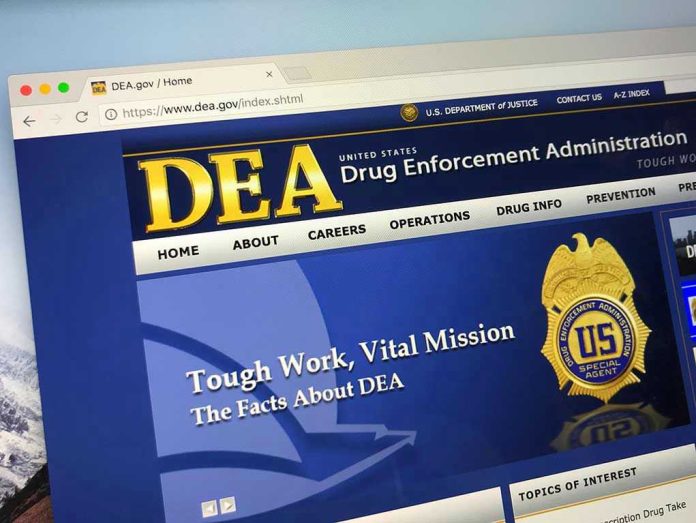
Federal drug regulators are trying to wall off a gas-station “legal opioid” without outlawing the kratom leaf many pain patients swear by.
Story Snapshot
- The Food and Drug Administration (FDA) asked to put 7-hydroxymitragynine into Schedule I, the same category as heroin.
- The Drug Enforcement Administration (DEA) is moving to temporarily control only high-strength 7-OH and related lab-made compounds, above strict thresholds.
- Natural kratom leaf is not being scheduled federally, but strong extracts, gummies, and shots are in the crosshairs.
- The fight highlights a deeper question: where is the line between a botanical pain reliever and an unregulated street opioid in disguise?
What 7-OH Is And Why It Suddenly Landed In Washington’s Crosshairs
7-hydroxymitragynine, or 7-OH, is one of the main active chemicals in the kratom plant, a tropical tree long used in Southeast Asia for pain and fatigue. In the human body, it binds to the same receptors as classic opioids, which is why many Americans use kratom products for chronic pain and to ease withdrawal from drugs like heroin or oxycodone. The FDA says reports to poison control about 7-OH and related products rose sharply in recent years, especially as gas-station extracts flooded the market.
Those products are not simple tea made from crushed leaf. Many are ultra-concentrated gummies, tablets, drink mixes, and neon-colored “shots” that pack far more 7-OH than the plant ever did on its own. In July 2025, the FDA publicly urged the DEA to classify concentrated 7-OH products as Schedule I controlled substances, arguing that they act like dangerous, illegal opioids and carry a high risk of addiction and overdose. That recommendation set the stage for the current push to clamp down.
How The FDA And DEA Say These Products Cross The Line
Under federal law, a Schedule I drug is supposed to meet three tests: high potential for abuse, no accepted medical use, and a lack of safety even under medical supervision. The FDA claims concentrated and synthetic 7-OH products hit all three. In its 2025 press statement, the agency framed them as “dangerous, illegal opioids” hiding behind kratom branding, often sold in smoke shops and convenience stores next to energy drinks and candy. Federal health officials say some lab-made versions can be many times stronger than morphine at the receptor level.
DEA records show the Department of Health and Human Services reviewed the science and told the agency that synthetic 7-OH and three related compounds have no accepted medical use and a high abuse potential. That opinion clears the way for Schedule I control. The concern is simple and rooted in conservative common sense: if a substance behaves like a powerful opioid, is sold like a snack, and reaches teens and vulnerable users with no prescription or medical oversight, the government views it as a public safety problem, not a wellness product.
Why Regulators Are Targeting Thresholds Instead Of Banning Kratom Itself
The hot-button issue for many readers is whether this is a backdoor federal ban on kratom. The answer, based on the record so far, is no. The Congressional Research Service summary of the DEA action states clearly that the planned temporary scheduling “will not apply to the kratom plant itself” so long as 7-OH stays below set concentration limits. For raw plant material, the threshold is 0.05 percent 7-OH by dry weight.
For anything processed or synthetic, the rules get tighter. The DEA notice covers products made in the lab, or derived from kratom and turned into extracts, concentrates, processed edibles, or pills. If those products contain more than 0.05 percent 7-OH or more than 1 milligram of 7-OH per unit, they would be treated as Schedule I once the temporary order takes effect. In plain language, that draws a line between traditional leaf use and modern “legal opioid” branding that pushes the chemistry far beyond nature’s design.
What This Means For Pain Patients, Industry, And Federal Power
For people using kratom tea or modest capsules to manage long-term pain, the federal record so far suggests their products may remain legal if they stay below the thresholds. The FDA itself said its recommendation was aimed at concentrated 7-OH products, not natural kratom leaf. That matters to Americans who want to avoid both prescription opioids and the wild west of smoke-shop chemistry. It also echoes a long-standing conservative view: adults should retain access to lower-risk alternatives while government targets clearly dangerous abuses.
For four years, the 7-OH industry has told regulators, retailers, and consumers:
“It isn’t an opioid.”
“It doesn’t cause respiratory depression.”
“Naloxone does not reverse it.”
“It isn’t addictive.”
“It’s just a dietary supplement.”Now read what Shaman Botanicals submitted in…
— Todd Underwood (@thekratomcowboy) July 29, 2026
On the other hand, the temporary scheduling will hammer parts of the booming kratom extract industry. Once 7-OH above the threshold becomes a Schedule I substance, manufacturing, distribution, sale, and possession can carry criminal and civil penalties under the Controlled Substances Act. Companies that built a business on selling brightly packaged “gas-station opioids” will either need to reformulate under the thresholds, push into a true medical-drug pathway, or shut down. That is where the loudest pushback and lobbying will likely come.
Why This Fight Looks Like Other Flashpoints Between Natural Health And Drug Control
This dispute repeats a familiar pattern in American drug policy. Regulators focus on a new, high-potency form of a familiar plant or ingredient. Industry and advocates warn that the rule will spill over and hurt legitimate, lower-risk users. In 2016, the DEA floated a plan to put both mitragynine and 7-OH into Schedule I, which would have effectively banned kratom nationwide, but backed off after public outcry and questions about the science. The current approach is narrower and threshold-based, but the mistrust remains.
From a conservative standpoint, the core tension is between two values: personal responsibility and the duty of the state to protect citizens from clear, proven harms. If synthetic and concentrated 7-OH really behaves like a strong opioid and targets young or desperate people through flashy, low-information marketing, strict control may align with basic law-and-order instincts. If federal agencies quietly stretch limited evidence to strangle a whole category of herbal pain relief without open data, that would cut against transparency and individual freedom. The record so far is heavy on conclusions, light on public toxicology details, which is why many people want to see the full science file.
Sources:
pjmedia.com, dea.gov, en.wikipedia.org, fda.gov, govinfo.gov, venable.com, news.bloomberglaw.com