Secretary of War Pete Hegseth delivered an unmistakable warning to Tehran as U.S. warplanes dominate Iranian skies, declaring America will decide when operations end—not the regime that has threatened our forces and allies for decades.
Story Snapshot
- U.S. and Israeli forces continue “Epic Fury” strikes against Iran’s missile infrastructure, navy, and nuclear facilities four days into operations
- Secretary Hegseth confirms American air superiority over Tehran, with operations continuing until Washington determines mission completion
- President Trump signals campaign nearing objectives after confirming death of Supreme Leader Ali Khamenei and senior Iranian officials
- Seventy-five retired U.S. generals and admirals endorsed strikes to counter Iran’s decades-long terrorism sponsorship and threats against American interests
Decisive Action After Decades of Iranian Aggression
Secretary of War Pete Hegseth briefed the nation on March 21, 2026, as joint U.S.-Israeli military operations entered their fourth day against Iranian targets. Operations “Epic Fury” and “Roaring Lion” have systematically dismantled Iran’s ballistic missile production facilities, destroyed naval assets, and degraded nuclear infrastructure across the Islamic Republic. Hegseth emphasized American warplanes now fly over Tehran at will, a stark demonstration of military dominance unthinkable under previous administrations that relied on empty diplomatic threats and vague red lines.
President Trump authorized these strikes after Iran redoubled missile production following last summer’s 12-Day War, threatening U.S. military bases, Israeli population centers, and freedom of navigation through critical waterways. Iranian-backed proxies in Yemen, Iraq, and Lebanon intensified attacks on American and Israeli targets while Tehran openly vowed to evict U.S. forces from the Middle East and eliminate Israel entirely. This pattern of escalation, combined with Iran’s bad-faith negotiations over its nuclear program, left the administration with a clear choice: permit an emboldened adversary to acquire nuclear weapons or act decisively to protect American lives and interests.
Military Success and Strategic Objectives
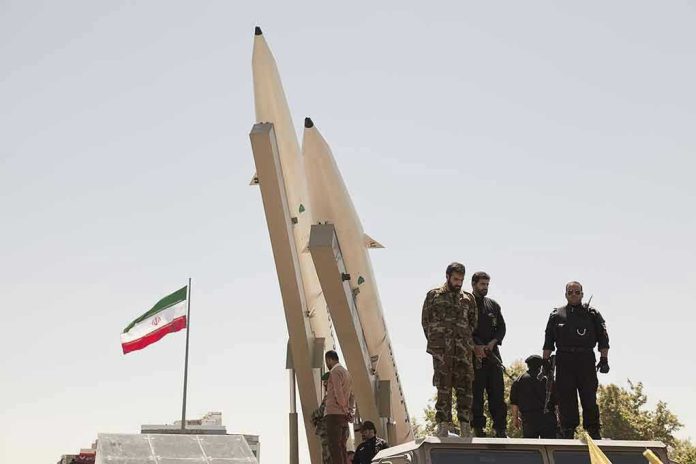
The campaign has achieved remarkable results in degrading Iran’s military capabilities without deploying ground forces. U.S. and Israeli air power systematically targeted Iran’s reconstitution efforts, disrupting missile launch timelines and destroying production facilities that threatened regional stability. American defensive systems intercepted thousands of Iranian missiles and drones, protecting tens of thousands of U.S. service members and allied forces throughout the region. Hegseth’s briefing confirmed the death of Supreme Leader Ali Khamenei and multiple senior Islamic Revolutionary Guard Corps commanders, creating a leadership vacuum in Tehran at a critical moment.
Seventy-five retired U.S. military leaders issued an open letter on March 3, 2026, supporting the strikes as vital to countering Iran’s decades-long campaign of terrorism sponsorship and regional destabilization. These experienced commanders recognized what Washington establishment figures refused to acknowledge: Iran’s threats to evict American forces and eliminate Israel required a forceful response, not another round of ineffective negotiations. The retired generals and admirals specifically commended U.S.-Israeli military cooperation, highlighting the effectiveness of joint operations against a shared adversary that has killed Americans since the 1983 Beirut barracks bombing.
Questions About Endgame and Allied Commitments
President Trump posted on Truth Social March 20 that operations were “getting very close” to objectives and suggested considering “winding down” without a formal ceasefire, declaring “we have won.” However, the administration simultaneously announced deployment of 2,200 to 2,500 Marines to the region, and blasts continued in Tehran as of March 21. This apparent contradiction raises questions about the campaign’s final phase and what conditions would constitute mission completion. Trump’s statement that allied nations should assume responsibility for securing the Strait of Hormuz after U.S. withdrawal suggests Washington expects burden-sharing from Gulf states and European partners.
The administration’s approach has confused both allies and adversaries regarding ultimate war aims, according to regional observers. European and Gulf nations remain reluctant to commit forces for post-conflict stabilization or maritime security operations, potentially leaving critical tasks incomplete. Iran continues launching attacks despite catastrophic losses, including an alleged strike near Jerusalem’s holy sites that damaged areas near the Al-Aqsa Mosque and Western Wall. These developments highlight the challenge of translating battlefield dominance into lasting strategic outcomes when adversaries retain capacity for asymmetric responses and allies hesitate to share post-war responsibilities.
Long-Term Implications for Regional Security
The campaign establishes a precedent for decisive American action after years of restrained responses to Iranian provocations. President Trump’s stated objective that Iran will “not ever” acquire nuclear weapons represents a fundamental departure from policies that permitted Tehran to advance uranium enrichment while negotiating. If successful, these operations could weaken the Iranian regime sufficiently to trigger internal uprisings among populations brutalized by IRGC crackdowns on protests. However, the long-term stability of any post-conflict arrangement depends on allied willingness to maintain pressure and prevent Iranian reconstitution of military capabilities.
The American people deserve to understand what victory means beyond tactical battlefield successes. Iran’s terror networks remain active across Lebanon, Yemen, and Iraq despite significant losses exceeding 1,000 Hezbollah fighters. The Strait of Hormuz, through which 20 percent of global oil and liquefied natural gas transits, requires ongoing security guarantees that Washington apparently expects others to provide. Russia and China stand to benefit if America withdraws prematurely, potentially filling any vacuum with support for a weakened but surviving Iranian regime. These strategic questions demand clear answers from officials who too often prioritize political considerations over frank assessment of what protecting American interests actually requires in a dangerous world.
Sources:
Open Letter from 72 Retired US Military Leaders in Support of Joint US-Israeli Strikes on Iran
Trump, allies vague on endgame for Iran
From allies to enemies: 10 key turning points in US-Iran relations