Iran’s brazen blockade of the Strait of Hormuz threatens global energy security and American interests, prompting even UK Prime Minister Keir Starmer to join international condemnation amid rising tensions.
Story Highlights
- Starmer, alongside France, Germany, Italy, the Netherlands, and Japan, strongly condemns Iran’s attacks on commercial vessels and energy infrastructure in the Gulf.
- Iran targets Saudi oil refineries, Qatari gas facilities, and Kuwaiti sites, escalating after Israeli strikes on its natural gas field.
- UK boosts defensive support with RAF jets countering Iranian drones and air defenses protecting allies, while planners join US Central Command.
- UN Security Council Resolution 2817 demands Iran cease aggression; Starmer calls regime “utterly abhorrent” for UK threats and internal brutality.
Iran’s Escalating Attacks in the Gulf
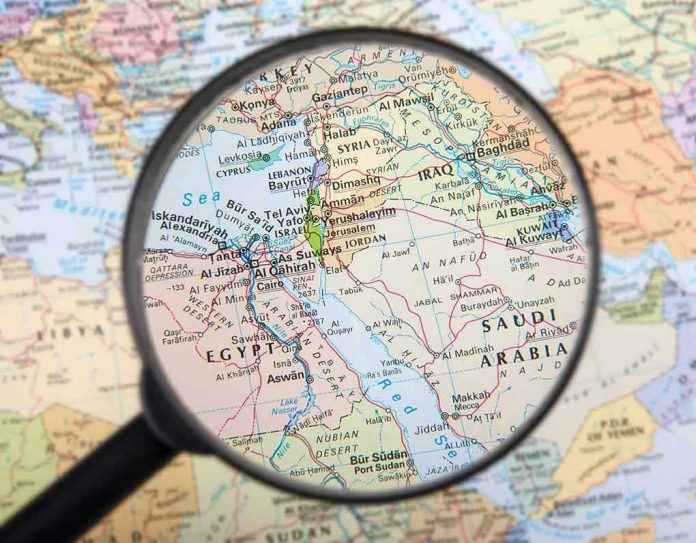
Iran launched strikes on energy infrastructure across Saudi Arabia, Qatar, and Kuwait following Israeli action against its main natural gas field. These attacks hit a Saudi oil refinery, Qatari gas facilities, and two Kuwaiti oil refineries. The regime also blockaded the Strait of Hormuz, laying mines, deploying drones, and firing missiles to halt commercial shipping. This de facto closure disrupts 20% of global oil trade, spiking energy prices worldwide. UK Prime Minister Keir Starmer chaired an emergency Cobra meeting to address the crisis.
International Condemnation Led by Starmer
Starmer issued a joint statement with leaders of France, Germany, Italy, the Netherlands, and Japan. The six nations declared Iran’s actions on unarmed vessels, civilian infrastructure, and the strait “in the strongest terms.” They demanded Iran immediately stop threats, comply with UN Security Council Resolution 2817 passed March 11, 2026, and allow safe passage. The leaders noted effects harm vulnerable people globally, underscoring shared stakes in stability. This coordination signals unity against Iranian aggression.
UK Military Response and US Alignment
UK Defence Secretary John Healey pledged to “step up” defensive aid to Gulf states hit by Iran. RAF jets fly sorties against Iranian drones, while British air defenses shield Saudi infrastructure. UK planners collaborate with US Central Command on reopening the strait. Starmer consulted NATO’s Mark Rutte, prioritizing protection of UK citizens, ally defense without wider war, and swift resolution. These steps align with President Trump’s America First approach to countering threats from destabilizing regimes like Iran.
Starmer’s government highlights Iran’s history of backing over 20 lethal plots on UK soil, threats to dissidents and Jewish communities, and crushing domestic dissent. Preventing Iranian nuclear weapons remains a core UK goal amid escalation risks.
MOMENTS AGO: United Kingdom Prime Minister Keir Starmer unleashes against Iran for causing "untold economic damage" in the Strait of Hormuz, as the United States begins its naval blockade on Iranian ports in the waterway.
"The freedom of navigation is vital and must be restored.… pic.twitter.com/cCH9SjmLXg
— Fox News (@FoxNews) April 13, 2026
Impacts on Energy, Economy, and American Interests
The blockade and attacks jolt global energy markets, raising costs that hit American families and fuel inflation concerns from past mismanagement. Prolonged conflict worsens UK’s living expenses, mirroring US struggles with high energy prices tied to weak foreign policies. Gulf economies suffer direct hits, while trade routes vital for US commerce face shutdown. Starmer warns of nuclear proliferation dangers, echoing conservative calls for strength against rogue states eroding founded principles of secure liberty and prosperity.
Iran’s actions depart from international norms, fueling bipartisan frustration with elites who prioritize power over people. Both sides recognize government failures in securing borders, energy, and dreams of hard work. This crisis demands resolve to protect allies and trade, preventing deeper chaos.
Sources:
https://www.gov.uk/government/speeches/pm-statement-on-iran-28-february-2026
https://www.gov.uk/government/speeches/pm-remarks-16-march-2026