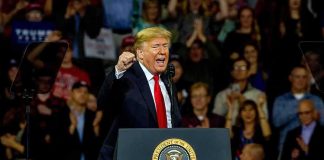
Illinois Governor JB Pritzker seeks to cement unprecedented power through a third term while questions swirl about whether he’ll abandon the state for White House ambitions, exploiting a loophole that 37 other states closed to prevent exactly this kind of concentrated control.
Story Snapshot
- Pritzker aims to become first Democrat governor in Illinois history to win three terms, potentially controlling state until 2031
- Illinois remains one of only 13 states without gubernatorial term limits, allowing unlimited power accumulation
- Republicans challenge Pritzker’s record on COVID overreach, $5M+ in fraudulent unemployment payouts, and suspected presidential ambitions
- Billionaire self-funding of $350M+ silences Democratic critics while pushing assault weapon bans and clean energy mandates
Power Without Limits in Blue State Illinois
JB Pritzker announced his third-term gubernatorial campaign on June 27, 2025, positioning himself to make history as Illinois’ first Democratic governor to serve three consecutive terms. The Hyatt hotel heir’s bid capitalizes on Illinois’ lack of term limits, a structural weakness that exists in only 12 other states nationwide. Pritzker selected Christian Mitchell, a former state representative advocating for assault weapon bans and clean energy mandates, as his new running mate after Lieutenant Governor Juliana Stratton departed to pursue a U.S. Senate seat. This consolidation of power raises fundamental questions about governmental accountability and whether concentrated control serves Illinois families or special interests.
Questionable Track Record and White House Speculation
Pritzker’s tenure has drawn sharp criticism from Illinois conservatives and Republicans who point to heavy-handed COVID-19 restrictions and over $5 million in fraudulent unemployment benefit payouts during his administration. GOP Senator Jason Plummer noted that Pritzker’s massive personal wealth silences uncomfortable Democrats within his own party, creating a political environment where dissent is financially unviable. Meanwhile, widespread speculation about Pritzker’s 2028 presidential ambitions casts doubt on his stated commitment to serving a full third term. His frequent national Democratic fundraising travels and high-production campaign launch events signal ambitions extending far beyond Illinois borders, raising concerns he may abandon the state mid-term for higher office.
Self-Funded Campaign Dominance and Policy Concerns
Pritzker’s billionaire status enables unprecedented campaign self-funding, having already invested over $350 million in previous elections to overwhelm opposition. This financial dominance allows him to bypass typical accountability mechanisms that force candidates to answer to donors and constituents alike. His policy agenda includes grocery tax elimination and child tax credit expansion alongside concerning priorities like advancing assault weapon bans that threaten Second Amendment protections. Republicans including Darren Bailey and James Mendrek are mounting primary challenges focused on Pritzker’s COVID policies, government overreach, and economic management failures including persistent pension shortfalls that threaten Illinois’ fiscal future.
Term Limit Absence Enables Unchecked Authority
Illinois’ lack of gubernatorial term limits stands in stark contrast to 37 states that restrict governors to two consecutive terms, protecting against the concentration of executive power. A 2014 petition gathering 600,000 signatures sought to impose term limits but was blocked by courts, leaving Illinois vulnerable to what the Illinois Policy Institute describes as special-interest capture. The last Illinois governor to serve beyond two terms was Republican Jim Thompson from 1977-1991, demonstrating how rare extended tenure has become in modern governance. If successful, Pritzker would control Illinois executive power for 12 consecutive years through 2031, creating policy entrenchment that could prove difficult for future administrations to reverse regardless of changing public sentiment or economic conditions.
Pritzker faces minimal opposition in the March 17, 2026 Democratic primary, running essentially unopposed with 52% favorability ratings in deep-blue Illinois. Republicans remain fragmented across multiple primary candidates, though Bailey’s previous 2022 challenge and conservative base mobilization around COVID grievances provide a foundation for general election opposition. The ultimate question for Illinois voters centers on whether unlimited executive tenure serves the state’s interests or whether it enables the kind of governmental overreach and special-interest influence that term limits were designed to prevent across most of America.
Sources:
Pritzker to seek 3rd term as Illinois governor amid questions of higher ambitions – Politico
37 states wouldn’t let Pritzker run for 3rd term in 2026 – Illinois Policy
Who is running for Illinois governor? 2026 Primary elections – CBS News
Illinois Governor – 2026 Primary Voters Guide – WTTW News