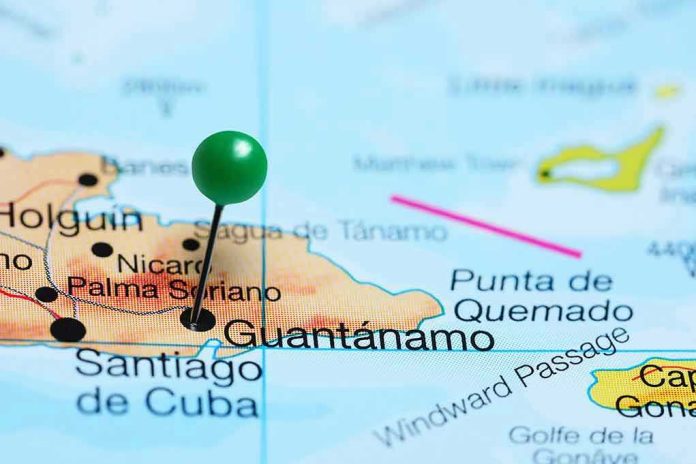
Cuba is running on empty, Trump is rattling sabers, and the real question is whether this slow-motion collapse ends with a U.S. Marine on the Malecón or something far stranger.
Story Snapshot
- Cuba’s fuel crisis is now open-air, daily-life proof that a six-decade embargo still bites.
- Trump’s second-term “maximum pressure” strategy weaponizes oil flows and tariff threats.
- Havana is wobbling from blackouts and shortages, but a U.S. invasion would be a huge gamble.
- The real fight is whether conservatives see sanctions as smart leverage or moral dead weight.
Cuba’s fuel collapse did not just “happen” one bad week
Cuba did not wake up one morning to find the gas tanks mysteriously dry. The island has lived under a United States economic embargo since 1962, blocking normal trade and finance and forcing Havana to rely on fragile deals with friendly regimes for fuel.[10] For years, Cuban leaders papered over chronic underinvestment and a broken grid by importing cheap oil, first from the Soviet Union and later from Venezuela. When those lifelines frayed, the empty shelves and long fuel lines were baked into the cake.
By the time Trump returned to the White House, Cuba’s energy system was already limping. Old power plants kept running past their design life. Transmission lines lost huge amounts of power. Havana ignored hard maintenance choices in favor of ideology and control. That history matters. When you start from a fragile base and someone closes the spigot, the crash is faster and more brutal. Blaming only Washington or only Havana misses how these pieces lock together.[4]
Trump’s “maximum pressure” turned fuel into a political weapon
Trump did not invent the embargo, but he did supercharge it. His team leaned into a “maximum pressure” playbook, openly designed to squeeze Cuba’s state oil sector and cut off fuel that keeps the economy moving.[1][2] The State Department’s own description of Cuba policy confirms a comprehensive embargo still in force and proudly maintained.[10] That is not neutral trade policy. It is deliberate economic leverage used against a government Washington, for decades, has called an adversary.
The sharpest twist came with the January 29 executive order threatening tariffs on any country that shipped oil to Cuba.[4] That move took the embargo’s logic and pushed it onto everyone else. Mexico’s national oil company reportedly suspended shipments. Other suppliers looked at their exposure to the United States market and thought twice. This is classic secondary pressure: do business with Havana and risk getting hit in the wallet by Washington. From a conservative realpolitik view, it is ruthless but rational power politics.
On the ground, Cubans feel blackouts, not legal theories
While think tanks argue over sanctions theory, Cuban families are counting hours in the dark. Cuba’s energy minister admitted the country had “absolutely no diesel” and “absolutely no fuel oil” left for basic power generation.[11] Blackouts interrupted banking, shut schools, and pushed people into the streets.[11][13] Jet fuel shortages forced airlines to cut flights and re-route passengers.[13] These are not abstract side effects. They are the visible cost of a strategy that makes fuel the pressure point.
United Nations experts and many human-rights researchers argue that this kind of fuel squeeze crosses a moral line, calling it an “extreme form” of unilateral economic coercion and a violation of international law.[4][24] The academic record on broad sanctions is ugly: repeated studies show serious hits to life expectancy, child health, and poverty when economies are strangled this way.[18][24] From a conservative standpoint that values ordered liberty, that evidence should trigger hard questions about whether the tool is doing more damage to civilians than to the ruling clique.
Is this a prelude to regime change or a bluff that bleeds Cuba?
Trump and allies have not hidden their hope that the Cuban system will crack. Reports describe senior officials framing the goal as political and economic change in Havana, even removal of President Miguel Díaz-Canel.[1][5] Trump has boasted that Cuba is “ready to fall” after the loss of Venezuelan oil support, hinting that the United States might “not stand by” if the regime begins to totter.[6] That kind of talk feeds a narrative that sanctions are not just pressure but preparation for something bigger.
Yet invading Cuba in 2026 is not like 1898. Any landing of United States troops on the island would trigger a political earthquake in Latin America, risk confrontation with Russia or China, and revive every memory of Cold War intervention. The United States military can win battles, but owning the aftermath in a collapsed, resentful Cuba is another story. Even hawkish strategists warn that regime change adventures often end with broken states and long, costly occupations, not tidy victories.
What a sober conservative approach would ask before sending ships
Serious conservatives pride themselves on prudence, not impulse. Before anyone cheers a blockade or invasion, three questions deserve straight answers. First: Do sanctions and threats actually move Havana toward respect for basic rights, or do they drive the regime deeper into the arms of Moscow and Beijing?[7] Second: Are we punishing rulers, or are we punishing grandparents waiting in blackout hospitals and kids stuck in dark classrooms?[18][24] Third: If the regime falls, who and what comes next, and who pays to rebuild?
Cuba in Crisis: Blackouts, Shortages, and Desperation Grip the Island Amid Deepening Humanitarian Emergency (June 2026)HAVANA — As prolonged power outages plunge much of Cuba into darkness for up to 20-24 hours a day, millions of Cubans are struggling with one of the most severe…
— Karl Kristian Skifte (@KarlSkifte76431) June 14, 2026
None of those questions have clear, honest answers yet. The record shows sanctions have worsened Cuba’s crisis, but it is not a clean, single-cause story; Cuba’s own misrule made the system fragile.[1][4][11] The embargo gives Washington leverage, but it also hands Havana a scapegoat for every failure. That tension is not going away. Whether Trump invades or not, the real choice for American conservatives is simpler and harder: keep doubling down on a 60-year strategy that has not delivered freedom, or design one that aligns force with responsibility and common sense.
Sources:
[1] Web – Cuba Is Collapsing. Will Trump Invade?
[2] Web – US imposes sanctions on Cuba’s state-owned oil company
[4] YouTube – Cuba fuel crisis deepens as US sanctions cut oil supplies …
[5] Web – The Crisis in Cuba, Explained – TIME
[6] Web – Cuba says it has completely run out of fuel, blames U.S. embargo
[7] Web – The US has eased its fuel embargo on Cuba, after sanctions helped …
[10] Web – The US has eased its fuel embargo on Cuba, after sanctions helped …
[11] Web – Cuba Sanctions – United States Department of State
[13] Web – Cuba announced late Sunday night that it will run out of jet fuel …
[18] Web – Ukraine Symposium – The Impact of Sanctions on Humanitarian Aid
[24] Web – The impact of humanitarian sanctions: Evidence from US … – CEPR