As thousands of migrants stream from Morocco into Spain’s tiny enclave of Ceuta, the local leader is warning that the border has “totally collapsed” and the city is in a full-blown humanitarian and security emergency.
Story Snapshot
- Thousands of mainly Moroccan migrants have crossed into Ceuta in recent days, many by swimming around border fences.
- Ceuta’s president Juan Jesús Vivas says reception centers are saturated, with hundreds sleeping in the streets and services “collapsed.”
- Local authorities are urging Madrid to declare a national emergency and even send the army to secure the frontier.
- The crisis exposes deep strains in Europe’s border system and raises familiar fears about elites ignoring both border security and basic humanitarian care.
Ceuta’s Border Overwhelmed By Sudden Mass Crossing
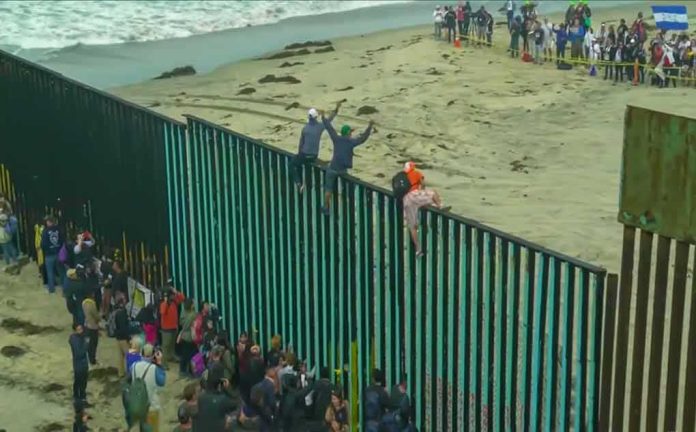
Ceuta, a tiny Spanish territory on the African coast, has been hit by a sudden surge of migrants crossing from neighboring Morocco. Local officials say more than 1,500 people arrived by sea over several days, and then thousands more forced their way across the border overnight. Many swam around breakwaters and border fences or walked in at low tide, taking advantage of fog and warm water. Videos from Tarajal beach show large crowds running into the enclave as border police struggle to respond.
Juan Jesús Vivas, president of Ceuta’s regional government, describes the situation as a “total humanitarian and social emergency.” He says migrant reception centers are “collapsed and saturated,” with no remaining space and hundreds of new arrivals sleeping outside on the streets. Spain’s Civil Guard and rescue services have been pulling swimmers from the water in boats, but they cannot keep up with the pace of crossings. At least some migrants have died at sea, and Vivas says around 60 bodies were found in the last year alone.
Local Authorities Demand National Emergency And Military Support
Facing what he calls a breakdown of order, Vivas has asked Spain’s national government to declare a state-level emergency on security grounds. He is pushing for more national police and even army units to be deployed to the frontier to “guarantee the inviolability of the frontier and citizen safety.” Ceuta’s leaders argue the tiny city cannot handle thousands of arrivals on its own territory, which covers only about 20 square kilometers yet already hosts a high share of foreign minors. They warn that without stronger national backing, both migrants and residents face rising danger.
Officials in Madrid have so far promised to guarantee security but have been slower to use formal emergency language. Spain’s Interior Ministry says it will not confirm exact numbers from Ceuta until its next migration report, even as local authorities speak of “thousands” crossing and a collapsed border. This tension between the small frontline city and the central government mirrors earlier crises, like the 2021 incident when around 8,000 people entered Ceuta in two days and the army was eventually sent in. Once again, a border shock is exposing gaps between what local communities see and how national and European leaders respond.
Humanitarian Strain And Social Fears On Both Sides
The rush into Ceuta is not only a border story; it is also a human story of crowded shelters and people sleeping rough. Many of the new arrivals are young men from Morocco and Algeria, but there are also minors and small children who risked the swim. Aid groups and local services say they are overwhelmed, and past emergencies in Ceuta led to complaints about collective expulsions and harsh treatment of vulnerable migrants. Residents, meanwhile, worry about crime, property break-ins, and basic order as thousands of desperate strangers suddenly appear in their compact city.
Under Spain’s bilateral agreements with Morocco and EU border policies, adult migrants intercepted crossing the border fences or swimming into Ceuta are subject to fast-track expulsion or return to Moroccan authorities.
— 🐾Philly Puppy🐾 (@liberalpuppy) July 30, 2026
The Ceuta crisis fits a wider pattern that Americans will recognize: border communities carry the daily burden while distant elites argue over labels and legal steps. European leaders talk about agreements, reports, and frameworks, but people on the ground see crowded streets, worn-out police, and migrants who risk death for a shot at a better life. For many on both the right and the left, this feels like another example of governments that fail to protect borders, fail to plan humane responses, and then move on once the cameras leave.
Sources:
humanevents.com, france24.com, aljazeera.com, youtube.com, atalayar.com, facebook.com, euronews.com, en.ara.cat, washingtonpost.com, bbc.com, latimes.com, russpain.com, reliefweb.int, ndtv.com, news.radioalgerie.dz, abcnews.com, revistas.comillas.edu