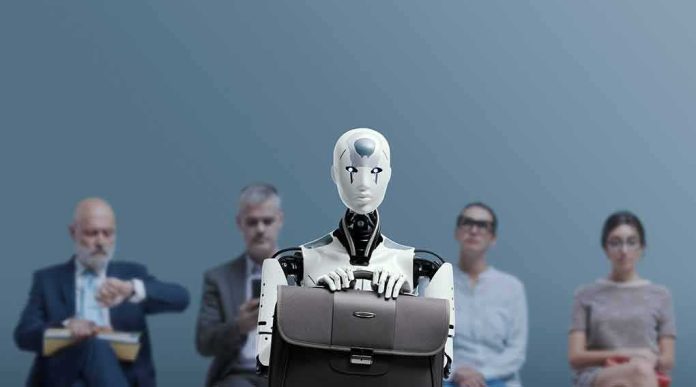
Bill Gates wants companies that replace people with robots to pay the same payroll tax those workers did, closing a gap he says pushes firms to swap humans for machines faster than society can handle.
Story Snapshot
- Gates proposes equal payroll taxes on human and robot-delivered labor.
- He frames it as funding retraining and a safety net, not punishing tech.
- Media coverage confirms he renewed this plan in late 2026.
- Critics warn a “robot tax” could slow growth and be hard to define.
Gates’s Core Pitch: Same Job, Same Tax
Bill Gates set a simple rule: if a firm automates a job, it should still pay the same Federal Insurance Contributions Act (FICA) payroll tax it would have paid for a worker. He told The New York Times that you “define a unit of labor” and charge the same payroll levy whether a human or a robot does the work. Business Insider summarized the aim as protecting tax revenue and funding a safety net for displaced people through retraining and benefits. Fortune reported he sees this as nudging firms to think twice before swapping people for machines.
Coverage across outlets shows this was not a stray line. CNN, Fortune, Business Insider, and Manufacturing Dive all reported Gates renewing the idea in August and September 2026, linking it to a broader package of rules, like reserving some jobs for people. That breadth matters. It signals a policy push, not just a sound bite. Gates also argues the current tax code favors capital over labor because companies can write off machines more easily than they can reduce payroll costs, which deepens the incentive to automate.
The Policy Gap: Clear Goal, Fuzzy Mechanics
The public record shows no draft bill, model statute, or clear definitions. There is no published threshold for what counts as a “unit of labor,” no enforcement outline, and no answer for software that automates tasks across teams or borders. That gap is not fatal to the idea, but it makes results uncertain. Without numbers on tax rates, expected revenue, and job effects, voters cannot judge whether the plan would fund real training or meaningfully slow layoffs. The case remains persuasive rhetoric, not scored policy.
Defining the tax base is the hardest part. A factory robot is visible. A cloud service that drafts contracts is not. Hybrid teams mix human effort with machine output every minute. Drawing a clear line between “robot labor” and normal business tools can trigger gamesmanship and lawsuits. Manufacturing Dive already notes organized pushback from industry, which sees the plan as a threat to investment and a drag on modernization. That political resistance will only harden if definitions feel arbitrary.
The Economic Fight: Productivity Versus Fairness
Critics say a “robot tax” is the wrong tool. The Information Technology and Innovation Foundation argues such taxes would slow productivity, wages, and growth, and that automation does not reduce total employment over time. A law review article calls the whole idea unworkable until experts can define what a robot is across the service economy. A modeling study finds robot taxes hinder growth, reduce jobs compared with cutting labor taxes, and fail to raise enough money to fix the damage they cause. Conservative common sense listens here: do not kneecap the engine of prosperity to fix a tax quirk.
But fairness also matters. Gates points to the bias that makes employers pay payroll taxes when they hire, yet lets them expense machines quickly, creating a tilt toward capital deepening even when the social cost is high. That tilt is real. The question is how to level the field without dulling innovation. A clean fix could be to reduce payroll taxes on work and broaden the corporate tax base on automation gains, rather than invent a new “robot” category. That keeps incentives for progress while easing the burden on people.
A Workable Path: Target the Outcome, Not the Gadget
Lawmakers could focus on outcomes we can measure. First, tie a modest levy to documented labor displacement inside a firm, regardless of whether a robot arm or a software agent did it. Second, sunset the levy if the firm restores headcount or raises wages above a benchmark, pushing employers to share gains. Third, use the revenue only for short, skills-based training that leads to jobs. That approach taxes the effect, not the tool, and it limits time in the penalty box.
Bill Gates says if a company fires a worker and puts a robot in that job, the robot should pay the same FICA tax the human paid.
Active workers fund retirees, and replacing the worker should not be a way to skip the pension bill.
"Society gets to decide. Just because the… pic.twitter.com/oPri9GrZW6
— Rohan Paul (@rohanpaul_ai) October 1, 2026
Congress should also demand real numbers before acting. Ask the Treasury and the Congressional Budget Office to score scenarios: equalized payroll treatment, lighter payroll on workers, or a narrow displacement fee. Require sector case studies to see where automation replaced jobs versus where it grew output and pay. The lesson from American conservative values is steady: reward work, reward innovation, and keep the tax code simple and fair. Gates put the right problem on the table. Now the design must match the slogan.
Sources:
insiderpaper.com, finance.yahoo.com, abcnews.com, tradersunion.com, ground.news, fortune.com, windfalltrust.org