Two 911 calls about a screaming person in a white van led to a Belt Parkway stop where New York City police shot and killed the driver after pepper spray and a Taser failed, according to police.
Story Snapshot
- Two separate 911 callers reported a person screaming “Let me go” in a white van before police moved in.
- Officers say the driver rammed police and civilian cars after less-lethal tools failed, then they fired.
- Police later found the woman from the van unharmed; investigators leaned toward a domestic dispute, not a child abduction.
- The stop shut the Belt Parkway; the driver died at a Brooklyn hospital after CPR at the scene.
What Set the Incident in Motion
New York City police said two 911 calls around 7:19 p.m. reported a person in distress inside a white van near West 22nd Street and Surf Avenue in Brooklyn. One caller described kicking and screaming and quoted, “Let me go.” Dispatchers aired the van’s description. Officers spotted the van heading onto the eastbound Belt Parkway near Coney Island Avenue and moved to stop it in traffic. The rapid response matched a possible abduction or domestic violence emergency, where time can decide safety.
Officers approached the van and issued commands. Police said they broke the passenger window and tried less-lethal force, including pepper spray and a Taser. According to the department’s account, the driver then used the van to ram police and civilian cars. Officers fired and struck the driver. First responders pulled the driver out, gave CPR, and took him to NYU Langone Hospital—Brooklyn, where he died. No officer gunshot injuries were reported in the initial accounts shared with press.
Who Was in the Van and What Police Found
Police later located the woman who had been in the van. She was unharmed, according to the preliminary account. Early headlines framed the case as a kidnapping, but police reporting shifted toward a domestic dispute involving the same woman. Several outlets cited officials who said prior allegations tied the driver to her in earlier incidents, which helps explain the intense response even as the exact offense that night remains under review.
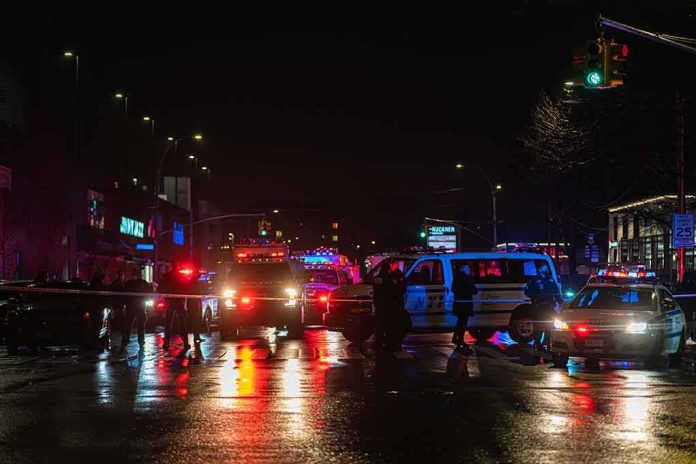
The scene stretched across a busy highway. Reports placed the stop near Exits 8 or 9 on the eastbound Belt Parkway. The shutdown snarled weekend travel while detectives processed the site and towed damaged cars. The New York Police Department said body-worn cameras recorded parts of the stop. Standard internal reviews will compare the commands, the use of pepper spray and a Taser, and the reported ramming with those recordings as the case proceeds.
Why Officers Treat Vehicles as Possible Weapons
Courts have recognized that a moving vehicle can be a deadly threat. When officers reasonably believe a driver is about to continue a dangerous flight or is using a car to endanger people, deadly force can be judged lawful. In Plumhoff v. Rickard, the United States Supreme Court upheld gunfire to end a risky chase that threatened others on the road, setting a key guide for these fast-moving calls.
Police policies also stress force escalation. Officers are trained to give clear commands, try less-lethal options when safe, and use deadly force only if they face an immediate threat of serious harm. The New York City Civilian Complaint Review Board has analyzed prior vehicle encounters and highlights how quickly seconds matter once a car pushes through a stop, raising risks for officers, passengers, and nearby drivers.
Key Facts That Shape Public Judgment
Two facts anchor the case. First, two separate 911 calls described real distress in a white van, which police later linked to an actual woman found alive. That supports the need for an urgent stop. Second, the New York Police Department says the driver used the van against police and others after less-lethal tools failed, which, if confirmed by video and crash reports, fits the legal frame that treats a car as a potential weapon on a crowded roadway.
🚨SHOCK FOOTAGE: NYPD officers fatally shot a 26-year-old kidnapping suspect on Saturday night in Brooklyn on the Belt Parkway near Coney Island Avenue after he rammed police cruisers and civilian vehicles while fleeing.
Police first used pepper spray and a Taser before opening… pic.twitter.com/DHi0C78XuD
— Moshe Schwartz (@YWNReporter) November 15, 2026
A few points remain in the department’s preliminary stage. Reports vary on the exact exit number and the precise sequence from commands to shots. Officials have not yet detailed which officers fired, how many rounds were used, or the exact path of the bullets. Those details typically come later through the Force Investigation Division, medical examiner findings, and any decision to release body-camera footage to the public.
Sources:
thegatewaypundit.com, nytimes.com, fox5ny.com, nbcnewyork.com, brooklyn.news12.com, abc7ny.com