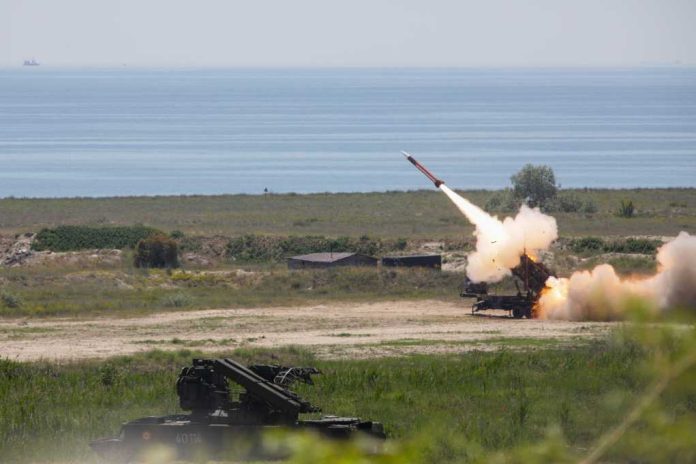
Iran’s decision to fire ballistic missiles and launch drones toward Kuwait and Bahrain drags the Gulf back to the brink and tests whether deterrence still works when patience runs out.
Story Snapshot
- United States Central Command reported Iranian ballistic missiles aimed at Kuwait and Bahrain, with intercepts and drone shootdowns claimed in real time [1][3].
- Tehran’s messaging frames the strikes as retaliation within an action-reaction cycle, not the start of a wider war [1][2].
- The pattern matches Iran’s multi-wave drone and missile playbook designed to pressure without full escalation [4].
- Regional air defenses held, but the ceasefire’s political scaffolding now looks paper-thin [1][2].
What actually happened, and why it matters in the next 72 hours
United States Central Command said Iran launched ballistic missiles toward Kuwait and Bahrain while also sending drones toward regional targets, some aimed at American forces in Kuwait, with interceptors and air defenses reportedly defeating several threats [1][3]. Broadcasts tracked sirens and contrails, with anchors describing a cross-border strike package rather than saber-rattling [1][2][3]. The next three days matter because early claims often shift as militaries tally impact, intercept rates, and intent, which shapes whether leaders call this a message or a breach [2].
Iran’s public line casts the launches as retaliation for prior strikes and maritime pressure, positioning them inside a tit-for-tat logic rather than a deliberate break of diplomacy [1][2]. That framing tries to narrow the political cost: Tehran signals capability and resolve while insisting conversation lines remain open. Washington and Gulf capitals counter by labeling the shots an escalation that risks civilian infrastructure and energy lifelines, and by highlighting successful defenses to discourage copycat salvos [1][3]. The narrative split influences insurance rates, oil flows, and coalition decision-making by Monday.
How these strikes fit Iran’s proven doctrine of pressure by persistence
The Center for Strategic and International Studies describes Iran’s Gulf campaign as a layered system built on waves of drones and periodic ballistic or cruise missiles to tax defenses, probe gaps, and impose economic anxiety over time [4]. Drones dominate numerically and create constant noise below the threshold that triggers outright war, while occasional missile shots raise the political temperature without guaranteeing mass casualties [4]. The latest launches track that template: combine speed, volume, and unpredictability to keep adversaries reactive, then claim retaliation to blur legal lines.
That design wagers on a simple arithmetic: even if most inbound threats get intercepted, a few will leak through across months, and the cumulative pressure can coerce concessions or extract deterrence benefits. Gulf states have invested heavily in integrated air and missile defense, but saturation risks, crew fatigue, and stockpile burn rates turn sustained defense into a budgetary and operational grind. If Tehran can force allies to spend millions per intercept while it spends far less per drone, the balance of pain tilts over time [4].
Ceasefire credibility, civilian risk, and the conservative test of common sense
Ceasefires survive on enforceable boundaries. Firing missiles across borders while claiming “retaliation” strains that boundary because civilians and critical infrastructure sit inside the blast rings regardless of intent. Reports that Kuwait- and Bahrain-bound missiles were intercepted and that drones targeting American forces were shot down suggest defenses worked this round, but the presence of airports, desalination plants, and energy facilities within range raises unacceptable downside for ordinary families and the global economy [1][3]. Common sense says stop shooting near civilian hubs.
Videos from Bahrain show interceptor missiles streaking across the sky as air defence systems responded to a potential threat. The developments came after Iran's IRGC claimed it had launched missiles toward American military bases in the Gulf in response to recent US strikes on… pic.twitter.com/7edvuKicYg
— Srijan Pal Singh (@srijanpalsingh) June 6, 2026
American conservative values emphasize peace through strength, clarity of red lines, and the duty to protect citizens and commerce. On that ledger, Tehran’s launches look like a deliberate test of allied resolve. If Washington and Gulf partners respond with firm, proportionate measures that harden defenses, protect shipping, and impose targeted costs on the capabilities used—while refusing mission creep—the deterrent signal strengthens. If responses wobble, the lesson Tehran learns is that incremental salvos pay and negotiations can be gamed alongside the gunfire [1][2][4].
What to watch next before markets and ministers react
First, watch for confirmation of aim points and damage; early fog favors spin, and verified impact on military sites versus civilian infrastructure will set the tone for diplomatic options [2]. Second, track whether Iran pauses or repeats with another drone-heavy wave; repetition would imply a campaign, not a one-night message [4]. Third, monitor coalition announcements on air defense resupply, maritime escorts, and sanction enforcement; logistics and law bite harder than press releases. Finally, listen for any channel that can lock in mutual restraint without rewarding cross-border fire [1][2].
Sources:
[1] Web – Iran Fires Off Missiles In ‘Serious Escalation’ Toward Gulf Neighbors …
[2] YouTube – Iran Launches Drone and Missile Assault Across the Gulf | ET Now
[3] YouTube – Iran launches drone and missile strikes across Gulf countries in …
[4] YouTube – Iran Launches 7 missiles At Kuwait And Bahrain