A Pennsylvania volunteer firefighter is accused of secretly torching barns and property, then racing in with his own department to fight the very fires he allegedly set.
Story Snapshot
- Investigators say 29-year-old volunteer firefighter Justin Sholly set three fires in about 24–30 hours, then responded with his fire company to at least two of them.[1][3][7]
- Police report using license-plate-reader technology and a vehicle search to tie him to the scenes, finding starter logs, lighter fluid, and a fire radio.[1][3][6]
- Court documents described in national outlets say Sholly admitted to setting the fires, while 18 civilians had to be evacuated from harm’s way.[1][7]
- The case highlights how rare but disturbing “firefighter arson” incidents are used to justify more surveillance and top-down control instead of fixing deeper problems.[3][7]
Allegations Against a Volunteer Firefighter Rock Small Pennsylvania Communities
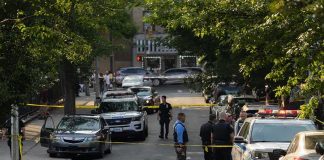
Police in Montgomery County, Pennsylvania say 29-year-old volunteer firefighter Justin Tyler Sholly is facing multiple felony charges after a string of fires in Souderton and Franconia Township over roughly a 24 to 30 hour period late last month.[1][3][6] According to local reporting, he served with the Perseverance Volunteer Fire Company, a typical small-town department where neighbors count on volunteers to show up in the worst moments.[1] That trust is now badly shaken as the legal process begins.
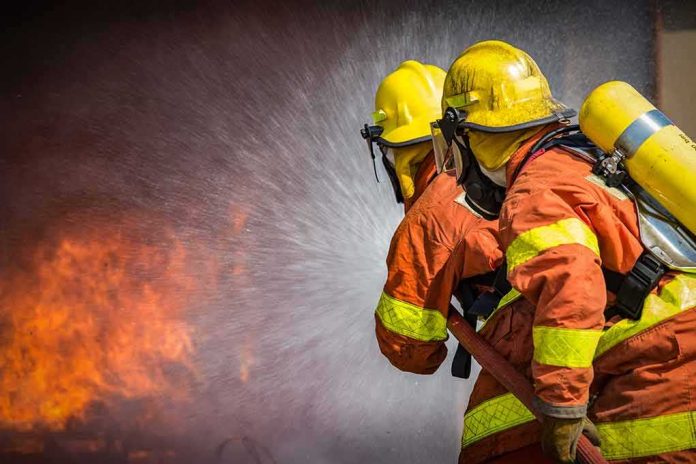
Investigators allege that Sholly deliberately set three separate fires and then responded with his fire company to help extinguish at least two of them.[1][3][7] Reports describe a pattern of barn and property fires that damaged two barns and several vehicles, forcing emergency crews to evacuate residents.[1] Authorities say a total of 18 civilians were put in harm’s way during the incidents, though thankfully no injuries were reported.[1] For rural families already squeezed by inflation and high costs, any loss of property hits especially hard.
How Technology, Evidence, and Alleged Confessions Built the Case
Local police say they used automated license-plate readers to identify Sholly’s vehicle as a common link near the fires, a reminder that high-tech tracking tools are now embedded even in small-town policing.[1][3] According to coverage of a police affidavit, officers then searched his vehicle and reportedly found several fire starter logs, lighter fluid, and a fire radio, items they say are consistent with intentionally setting and monitoring fires.[1][3][6] These details are being used to frame the case as a deliberate arson spree rather than an accident.
National outlets citing court documents report that Sholly admitted to setting all three fires, including allegedly describing how he lit wood logs before a blaze spread to a detached barn or garage.[1][3][7] One report notes that he allegedly went to his fire department after two of the blazes and then responded with the company to the scenes.[7] At this stage the public sees only summaries of affidavits, not full transcripts, so questions about the exact wording, timing, and context of any confession remain open and will have to be tested in court.
Firefighter Arson Is Rare but Real—and Often Politicized
Fire-service analyses and research describe “firefighter arson” as a rare but recurring problem: a very small minority of firefighters, sometimes motivated by excitement or a desire to play hero, have been convicted of setting fires they later respond to.[7] Rough estimates suggest roughly one hundred firefighters nationwide are convicted of arson in a typical year, a tiny fraction of those who serve but a huge blow to public trust each time it happens.[7] Each well-publicized case risks smearing thousands of honorable volunteers.
A volunteer firefighter has been arrested for allegedly setting fires and then responding to them with his fire department, according to officials in eastern Pennsylvania.
Justin Sholly, a 29-year-old member of the Perseverance Volunteer Fire Company in Souderton, was arrested…
— Qᴀɢɢ.ɴᴇᴡꜱ (@qaggnews) June 3, 2026
Highly dramatic stories like this also feed broader debates about surveillance, centralized databases, and government overreach. In this case, license-plate-reader hits reportedly played a key role in zeroing in on a suspect, showing how tools originally sold as crime-fighting solutions can track ordinary citizens everywhere they drive.[1][3] Conservative readers who back strong law enforcement but worry about mass data collection can see the tension clearly: technology that helps catch a bad actor can also be abused if not tightly controlled and transparent.
Why Due Process and Local Accountability Still Matter
Media coverage so far leans heavily on police and prosecutor narratives, with little from the defense side and no public release of the full criminal complaint or probable-cause affidavit.[1][3][7] That imbalance is common in high-profile cases and can quickly turn allegations into assumed guilt long before a jury ever hears evidence. For conservatives who value the Constitution and the presumption of innocence, it is critical that even disturbing allegations like these are tested through open court proceedings, not trial by headline.
Local communities now face twin challenges: holding any proven wrongdoer fully accountable while supporting the many volunteer firefighters who quietly protect lives and property every day. Responsible oversight, clear standards, and transparency in volunteer departments can address rare misconduct without inviting heavy-handed federal interventions or blanket suspicion of first responders. Citizens who stay engaged at the township and county level—watching budgets, policies, and training—are still the best safeguard against both crime and government overreach.
Sources:
[1] Web – Volunteer firefighter arrested for setting blazes and responding to …
[3] YouTube – Volunteer firefighter accused of arson spree in Pennsylvania
[6] Web – Arrested firefighter confesses to arson spree | 6abc.com – ABC30
[7] Web – Volunteer Firefighter Accused Of Setting Fires And Then …