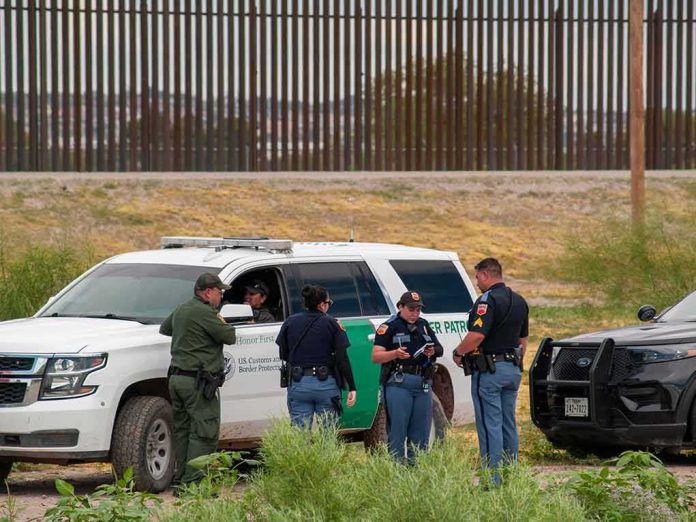
The Supreme Court handed President Trump a border victory, ruling that officials may turn back would-be asylum seekers who have not entered the United States.
Story Highlights
- Supreme Court ruled a prior “turnback” policy is lawful, backing border officers at ports of entry [3].
- Ruling aligns with the view that people standing outside the border lack a right to apply for asylum [4].
- Lower-court decisions that limited turnbacks now face conflict with the Supreme Court’s decision [2].
- The policy at issue was rescinded earlier, so implementation details still depend on current orders and stays [3].
What The Supreme Court Actually Decided
On June 25, 2026, the Supreme Court declared the defunct border “turnback” policy lawful. The case centered on whether border officials may refuse entry to migrants who have not crossed into the country and therefore have not triggered the asylum process. The ruling treated the earlier policy as a lawful exercise under current statutes. Bloomberg Law reported the Court declined to rehear the dispute, reinforcing that conclusion and leaving the decision in place [3].
The Court relied on a plain reading of asylum law. The logic tracks prior reporting that asylum protections attach when a person “arrives” in the United States, not while standing in Mexico. That reading supports the administration’s position that officers may block people who have not set foot in the country. ABC News previously summarized this approach when noting how a conservative majority analyzed the “arrives” language and the entry requirement tied to asylum claims [4].
How This Interacts With Earlier Court Fights
This Supreme Court ruling clashes with years of litigation over turnbacks and related border rules. The United States Court of Appeals for the Ninth Circuit in 2024 said systematic turnbacks violated federal law, which advocates interpret as requiring inspection and processing for those seeking protection. The Supreme Court’s 2026 decision effectively overrides that circuit stance. Still, the D.C. Circuit’s April 2026 ruling knocked down parts of a separate proclamation and guidance, adding legal crosscurrents to policy rollout [2].
The administration has argued that the Immigration and Nationality Act allows stronger border controls during what it calls an invasion-level surge. Policy trackers show a sequence of proclamations and rules between 2017 and 2026, and note that the April 2026 D.C. Circuit decision restored asylum access before stays complicated timing. This creates a mixed legal picture: the Supreme Court greenlit the old turnback framework, while separate orders shaped broader asylum limits and their enforcement windows [2].
What Changes Now At The Border
Border officers now hold firm legal cover from the Supreme Court for turnbacks at ports when individuals remain on the Mexico side. That does not mean every other restriction is active today. Bloomberg Law described the policy at issue as “defunct,” because it was rescinded in 2021. Any current use of similar measures must still track live court orders and agency directives. The key takeaway is legal permission for turnbacks at the line, not a blanket approval of all prior rules or proclamations [3].
JUST NOW: US Supreme Court deals MASSIVE BLOW to activist judges by allowing the Trump administration to BLOCK "asylum seekers" from entering America
"If you have to arrive in the US to start an asylum proceeding or an asylum claim. What if you're held on the side? You're not… pic.twitter.com/BKHtYsgnlC
— The Jewish Voice (@TJVNEWS) June 25, 2026
For conservatives, this is a rule-of-law moment. The decision respects Congress’s text and the border’s physical line. The Court also made clear that Congress can change the statute if it wants a different result. Until then, officers can say “not yet” to people who have not entered. Media and advocacy groups will claim human rights harms and urge fresh lawsuits. But the Supreme Court’s reading of the law now sets the standard for entry and asylum triggers [4].
Why It Matters For Security, Costs, And Sovereignty
Local communities bear the cost when illegal crossings spike. Hospitals, schools, and police feel the strain first. A clear border rule helps stop chaos at ports and between them. The ruling tells cartels and smugglers that the “line” means something again. It also backs the Trump administration’s push to end catch-and-release habits that fueled waves of entries and court backlogs. The decision narrows loopholes and supports the duty to defend the boundary before claims begin [3].
Expect swift pushback from advocacy groups that won earlier in lower courts. They will likely argue that turnbacks violate past injunctions or international norms. However, the Supreme Court now provides a controlling reading of when asylum rights start. The administration can act inside that rule while Congress debates changes. If Congress wants a different process, it must amend the law. Until then, the Court’s ruling stands as the nation’s binding guide for first contact at the line [4].
Bottom Line For Readers
The Supreme Court sided with border security. Officers may turn back people who have not stepped into the United States. This narrows abuse at the ports and helps restore order. Some other asylum limits remain tangled in separate cases, and the rescinded status of the old policy means agencies must issue clear guidance. But the core legal principle is set: asylum begins with entry. That is a win for sovereignty, common sense, and the rule of law [3].
Sources:
[2] Web – [PDF] RAICES v. Noem, No. 25-5243 – United States Court of Appeals
[3] Web – Border Restrictions and Court Orders 2017-2026
[4] Web – Supreme Court Rules Defunct Border Turnback Policy Is Lawful