President Trump’s Interior Department just agreed to pay a German energy company $1.22 billion to walk away from offshore wind farms, pushing total taxpayer buyouts toward $4 billion this year alone.
Quick Take
- Interior will pay RWE $1.22 billion to drop three wind leases off New York, California and Louisiana.
- Deals with TotalEnergies, Invenergy, Golden State Wind and Bluepoint Wind bring 2026 buyout totals near $4 billion.
- Companies must redirect refunded lease money into natural gas, geothermal and other conventional energy projects.
- Seven blue states are suing over the arrangements, and Senate Democrats have opened an investigation.
- Interior officials call the deals “common sense,” saying taxpayers should not fund “unreliable and costly” wind power.
RWE Walks Away From Three Wind Leases
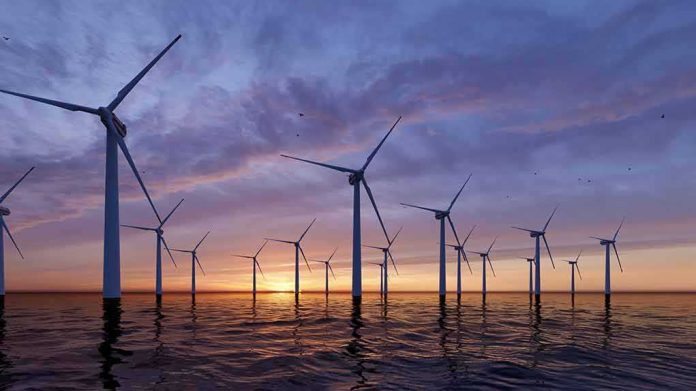
The German utility RWE announced it will surrender leases for wind farms planned off New York, California and Louisiana in exchange for $1.22 billion from the federal government. The payment roughly matches what RWE paid for the leases under the Biden administration, meaning taxpayers are essentially undoing a bad deal rather than handing the company a windfall.
A Pattern, Not A One-Time Deal
RWE is the fifth energy company to cut this kind of deal with Interior in 2026. TotalEnergies took roughly $1 billion in March to drop two East Coast projects. Golden State Wind and Bluepoint Wind followed in April with an $885 million buyout tied to California leases. Invenergy then took $765 million in June to cancel four leases off New York, California and Maine.
Bloomberg puts the running total at nearly $4 billion spent this year to unwind offshore wind commitments made under the previous administration. Each deal follows a similar pattern: the government hands back close to what the company originally paid for the lease, and the company promises to put that money into oil, gas or geothermal projects instead.
Interior Calls It Common Sense
Interior Department officials defended the payouts bluntly. The department said the American people would no longer fund “ideological subsidies” that propped up the “unreliable and costly offshore wind industry”. That framing lines up with President Trump’s long-standing opposition to offshore turbines, which he has repeatedly criticized as expensive, unreliable and harmful to coastal views and wildlife.
TotalEnergies said its refunded lease fees would help finance a liquefied natural gas plant in Texas along with other oil and gas work. Invenergy said its money would go toward natural gas power plants and geothermal projects. Supporters see this as taxpayers finally getting real energy investment instead of subsidized turbines that were never going to deliver cheap, dependable power.
Democrats And Blue States Push Back
Not everyone is on board. Seven states, including New York, New Jersey and Massachusetts, have sued over the cancellations, arguing the deals harm local energy plans and jobs. Senate Democrats, led by lawmakers including Senator John Hickenlooper, launched an investigation into the payouts, calling the spending questionable.
Critics also point out that some of these payments run through the Treasury’s Judgment Fund, normally reserved for settling actual lawsuits, even though there was no pending litigation with TotalEnergies when that deal was struck. That is a fair legal question worth watching, since taxpayers deserve a clear paper trail whenever billions of dollars change hands.
Why This Matters For Energy Policy
For years, offshore wind projects moved forward under federal leases pushed through during the Biden administration, often with limited public scrutiny of long-term costs. President Trump halted new permitting for offshore wind soon after taking office, leaving many of these projects with little chance of ever being built anyway. Buying out the leases now, rather than fighting years of litigation, may end up saving taxpayers more in the long run.
🚨 US PAYS $1.2B TO HALT WIND PROJECTS! 🇺🇸💨
The Trump admin just agreed to pay German firm RWE $1.2 billion to cancel ongoing U.S. offshore wind projects.
This massive payout continues a major policy shift away from wind power! 🛑⚡️ pic.twitter.com/WTY2PbaBkh
— Global Insight (@GlobalInsight20) August 7, 2026
Whether these deals truly count as “common sense” savings or simply reward companies for abandoning green-energy promises will likely play out in court and in Congress. For conservative voters tired of subsidized, unreliable energy schemes, the message from this White House is clear: fossil fuels and reliable power sources are back in favor, and offshore wind’s federal gravy train is over.
Sources:
latimes.com, nytimes.com, fortune.com, npr.org, apnews.com, bloomberg.com, reuters.com