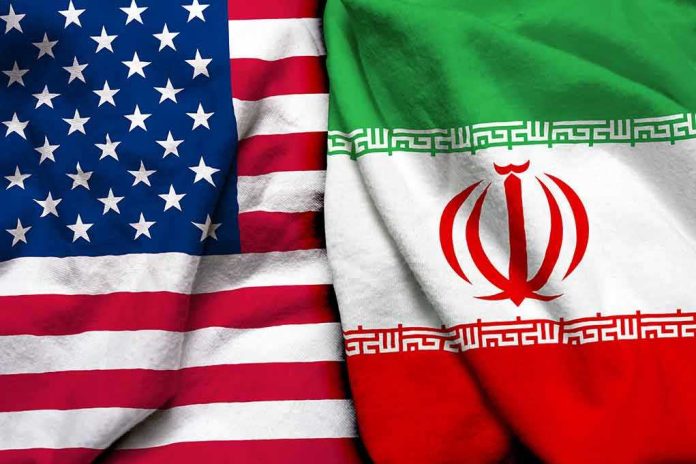
President Trump moved to make Iran pay cash for American victims, turning Tehran’s own “compensation” demand back on the regime.
Story Highlights
- Trump said the United States will demand compensation from Iran for Americans killed or wounded in Iran-linked attacks.
- Iran has pushed for its own reparations, asset releases, and control issues tied to the Strait of Hormuz in ongoing talks.
- Trump’s move places victim restitution at the center of any future negotiations, alongside sanctions and security terms.
- Both sides are using “compensation” as leverage in war and ceasefire bargaining, not just as legal claims.
Trump’s Demand: Compensation For American Victims
President Trump said he will demand that Iran pay compensation for Americans killed and gravely wounded in attacks tied to Tehran and its proxies. He posted the message after Iranian representatives pressed for payment from the United States over damage Iran claims it suffered during the conflict. Reuters reported the statement and framed it within active talks where both sides are floating steep terms to shape a settlement or ceasefire path.
Trump placed victim restitution alongside sanctions pressure and maritime security. He signaled that future talks will factor in Iran’s decades of support for violence across the region. The message reflects a clear shift: Iran’s push for money will not go unanswered. The United States will seek accountability on behalf of service members, families, and other victims who have long carried the costs of Iran-backed terror and attacks. That puts moral and financial pressure on Tehran.
Iran’s Counter Demands Complicate Negotiations
Iran has set out demands that include compensation from Washington, relief from sanctions, and assertions tied to the Strait of Hormuz. Reporting describes these as major obstacles to a deal. President Trump previously called parts of Tehran’s response unacceptable and said a ceasefire was “on life support.” These positions show how money, shipping access, and sanctions are bundled together in the negotiations, raising the stakes for energy markets and regional security.
Talks have seesawed as each side tests leverage. Iran’s push for payments and control of key waterways meets firm resistance from Washington, which sees the strait as vital to global trade and allied security. Trump’s compensation demand fits that contest. It ties any relief for Tehran to real costs Iran has imposed on Americans and partners. That framing could shape future bargaining, since each financial ask will meet a counterask linked to victims and deterrence.
Compensation As Leverage, Not Just A Legal Claim
State-to-state “compensation” often acts as negotiating leverage, not a standard court judgment. In this case, both sides are using payment language to influence outcomes on sanctions, shipping, and war termination. Reuters and other reporting present compensation as one piece of a larger package, which includes maritime access and security guarantees. That context explains why Trump’s demand matters: it resets the table to include American victims whenever Tehran seeks money for itself.
President Trump on Monday demanded from Iran compensation for those who have died amid the conflict, after Tehran called for compensation for damages.
The president said that, moving forward, the compensation requirement will be added to negotiations.https://t.co/uriCxPp7bf
— Ⓜ️Ⓜ️ Lauren Ashley Davis -OG Meidas Mighty 🦅 (@Meidas_LaurenA) August 10, 2026
For conservative readers, the bottom line is simple. The United States should not reward a regime tied to attacks on our people. Trump’s stance aims to flip the script: before Iran gets a dollar, it must face the Americans it hurt. That approach aligns with basic fairness, strong borders at sea, and a peace built on deterrence, not payouts. The policy may test talks, but it puts justice and security ahead of concessions that could embolden Iran.