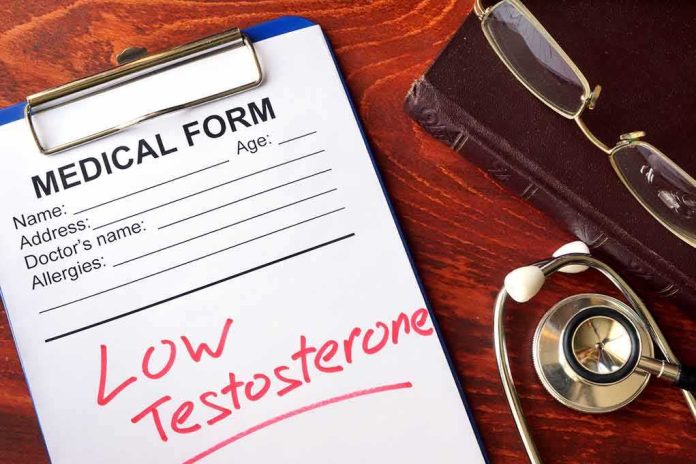
The Pentagon has ordered annual testosterone screening for every service member age 30 and up, tying hormones to readiness.
Story Snapshot
- The order makes testosterone screening part of the Periodic Health Assessment for troops 30 and older.
- Leaders link the move to human performance and combat readiness.
- Major medical guidelines advise against routine screening in asymptomatic men.
- Doctors warn about false positives, costs, and overtreatment risks.
What The New Pentagon Order Actually Requires
The Department of Defense issued a formal memorandum on July 15, 2026. It requires mandatory screening for testosterone deficiency for all active duty and reserve personnel ages 30 and older as part of the annual Periodic Health Assessment. The document’s language is unambiguous and effective immediately. The requirement sits inside the existing readiness checkup, not as a separate clinic visit. Reporting chains and medical staff will capture and track results through normal military medical systems.
Defense leaders framed the order as a human performance and readiness initiative. Public statements said the goal is to identify deficiency and offer care within clinical standards, not to chase artificial enhancement. Coverage from national outlets emphasized the link to “operating at your best,” and to a broader push to measure what can be measured across the force. The policy does not mandate treatment; it mandates screening and clinical follow-up when indicated.
Why Many Clinicians Are Pushing Back
Clinical groups and front-line doctors say the evidence does not support screening every asymptomatic man over 30. The Endocrine Society’s practice guideline recommends against routine population screening and calls for diagnosis only when symptoms fit true deficiency, confirmed by repeat morning tests using reliable assays. A report surveying urologists and endocrinologists flagged the risk of false positives, extra testing, and treatment that may not help performance or long-term health.
Independent reporting found most experts they contacted questioned the medical basis for universal screening. Several said no clear data show it will improve combat readiness. Others warned the program could push some troops toward therapy they do not need. That carries real downsides, including fertility effects and other adverse events, if used without strict indications and careful monitoring. From a conservative lens, spending on mass testing without proof of benefit fails the basic “show me the value” test.
The Readiness Math: Benefits, Risks, And The Base Rate Problem
True hypogonadism exists and matters. When a symptomatic service member meets diagnostic criteria, treatment can improve quality of life and health. The challenge is base rates. In broad, healthy populations, more people sit near cutoffs. Hormone levels also change by time of day, stress, sleep, and weight. One low number in a healthy 32-year-old often resolves on repeat testing. Mass screening in such settings tends to create more gray-zone results and follow-ups than clear wins.
Medical common sense calls for targeted testing first. That means test when there are symptoms like low libido, erectile dysfunction, fatigue with low morning levels, or when high-risk conditions exist. It also means confirm abnormal values with a second morning blood draw and assess underlying causes such as sleep apnea, obesity, or medicines. That approach aligns with civilian guidelines and reduces false alarms while still catching real cases that need care.
What Commanders And Troops Should Watch Next
Implementation details will decide whether this policy helps or harms readiness. Clear clinical pathways must require morning draws, confirmation of low values, and symptom checks before any therapy. Documentation must prevent “hormone scores” from creeping into promotion, assignment, or special-duty gates. Oversight should track outcomes: number of screens, false-low rates, referrals, starts on therapy, adverse events, and any measurable gains in readiness metrics. If those gains do not appear, leaders should scale the program back.
Taxpayers deserve value, and troops deserve safe, effective care. A data-driven pilot across select units could have answered the key questions first. Since the order is already live, the next best step is strict guardrails, transparency, and fast course corrections. That respects the mission and the men and women who serve. It also fits conservative priorities: do what works, prove it, and stop doing what does not.
Sources:
cbsnews.com, bbc.com, abc11.com, pbs.org, urologytimes.com, reuters.com, legion.org, politico.com